English
 中文简体
中文简体 русский
 Español
 Deutsch
ndl ndl ndl ndl ndl ndl ndl ndl ndl ndl ndl ndl ndl ndl ndl ndl
Machinery that does not return to position consistently, CNC tooling that drifts under load, or assembly systems that absorb vibration unevenly — these are the kinds of problems that trace back, more often than designers initially expect, to the spring components at the heart of the mechanism. Understanding how does a compression spring work in an industrial context is not an academic exercise. It is the foundation for specifying the right component, diagnosing performance issues before they cascade into downtime, and selecting a supplier whose manufacturing capability actually matches what the application demands. For engineers designing CNC systems and procurement teams sourcing mechanical components, the gap between a standard spring and a Precision Compression Spring carries real consequences in production environments where tolerance stacks and cycle counts are not theoretical.
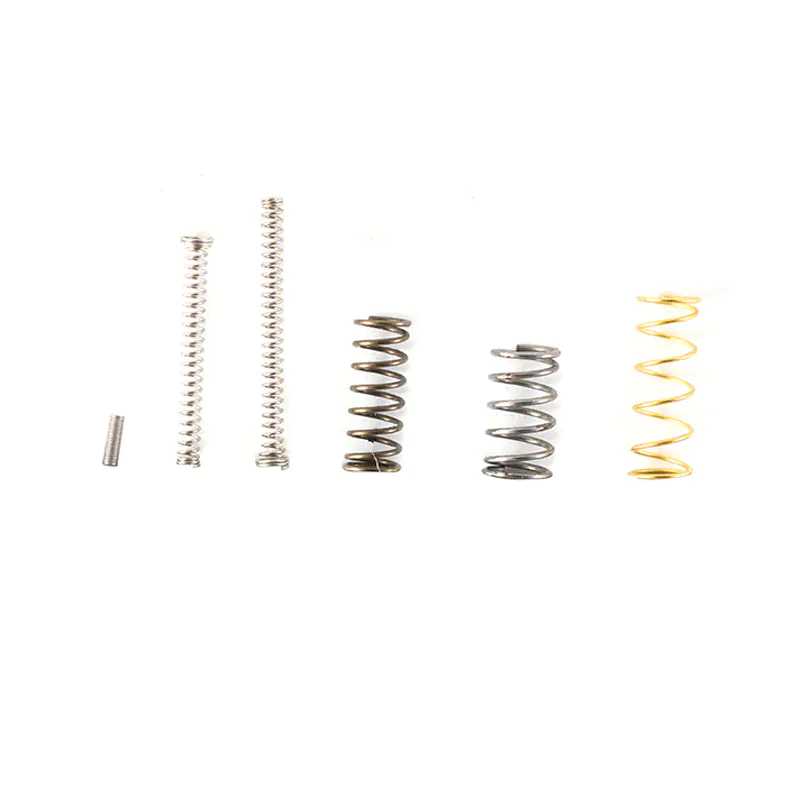
In many mechanical assemblies, the spring is treated as a secondary component — smaller than the housing, cheaper than the actuator, easy to overlook in a bill of materials review. This framing is misleading. In a CNC machine, a delivery mechanism, or an automated assembly line, the spring is frequently the element that defines whether the system returns to a repeatable position, absorbs impact at the correct rate, or holds a defined preload across thousands of cycles.
The functions compression springs serve in industrial and CNC contexts include:
In each of these functions, the spring's performance is not defined by whether it works — nearly any spring will work briefly — but by whether it continues to work consistently across the temperature range, load range, and cycle count the application demands.
A compression spring stores mechanical energy when compressed and releases that energy as a restoring force when the compressing load is removed. The relationship between compression distance and the force generated is described by Hooke's Law: force is proportional to displacement, with the spring rate — the ratio of force change to deflection change — as the constant of proportionality.
In practice, this means:
The practical value of this relationship for engineers is predictability. A spring with a defined and consistent spring rate allows the designer to calculate exactly how much force will be applied at any point in the mechanism's travel, which is the foundation for designing repeatable, controllable mechanical behavior.
CNC machines are built around precision movement — linear axes, rotary axes, tool changers, workholding systems, and probing assemblies all require controlled, repeatable motion. Springs appear throughout these systems in configurations that have different performance priorities.
Tool positioning and spindle assemblies: Springs in tool clamping mechanisms apply the clamping force that holds the tool holder in the spindle taper. The spring must generate a consistent clamping force across the full service life of the tool changer mechanism — hundreds of thousands of tool changes in a production environment. Load relaxation over time, or variation in free length across a batch of springs, translates directly into inconsistent clamping force and potential tool pull-out under cutting loads.
Axis way systems: Linear guideways in CNC machines rely on preloaded rolling elements to maintain stiffness and accuracy. Springs in these systems maintain preload as the guideway experiences thermal expansion and contraction during operation. A spring that loses preload with temperature or cycling allows the guideway to develop play, which shows up as dimensional errors in machined parts.
Automatic tool changers: Tool change mechanisms use springs in the gripper fingers, locking mechanisms, and cam-actuated positions throughout the exchange cycle. The speed of modern tool changers — completing a change in under a second in production machines — places high demands on spring fatigue life and consistency. A spring that weakens or changes its free length after extended cycling changes the timing and contact forces in the exchange mechanism, causing intermittent tool change failures.
Workholding and fixturing: Quick-release fixtures, collet chucks, and hydraulic clamping systems use springs to maintain a defined state — open or closed — when hydraulic pressure is removed. Consistency of the spring's opening or closing force determines whether the fixture releases the workpiece cleanly or grips it inconsistently.
Probing and measurement systems: Contact probes on CMM machines and on-machine probing systems use springs to maintain stylus contact force. The spring must apply the correct force to ensure consistent contact without deflecting the stylus enough to affect measurement accuracy. In these applications, the spring rate and free length tolerance requirements are tighter than in most mechanical applications.
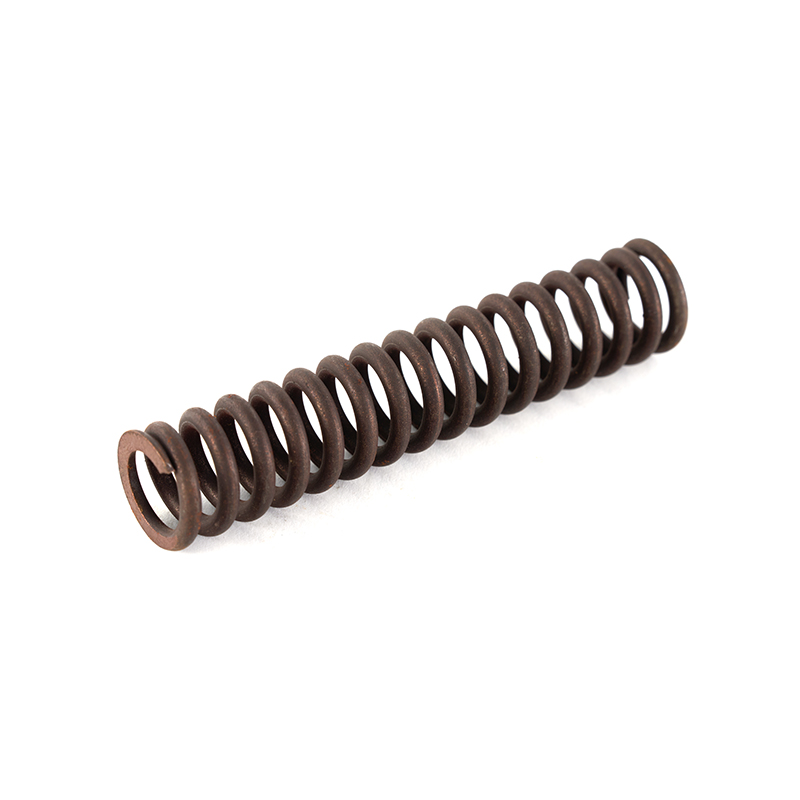
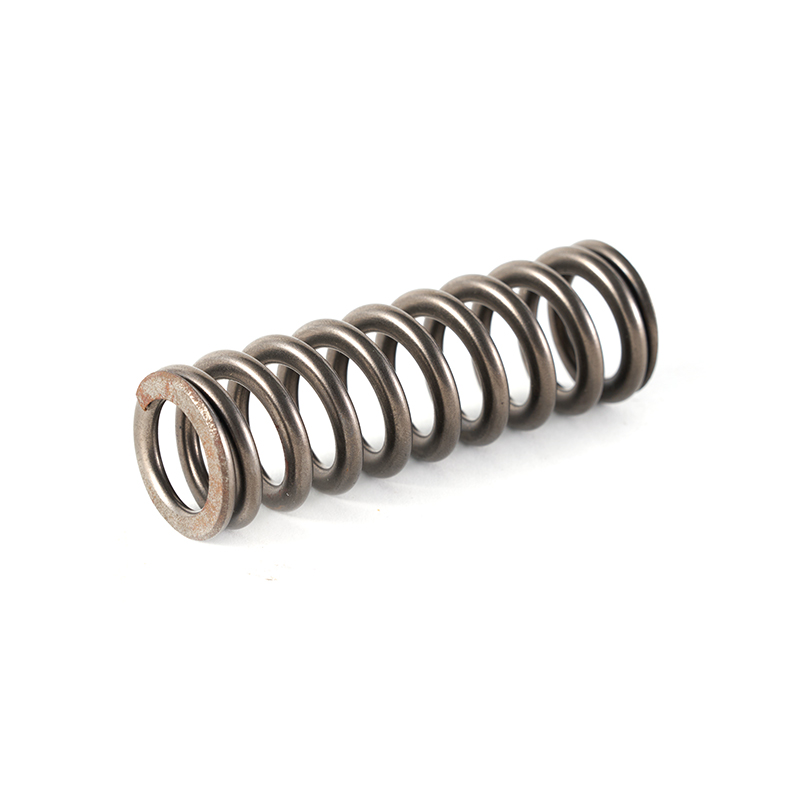
A Precision Compression Spring is manufactured to tighter tolerances than a standard compression spring across multiple characteristics simultaneously. The word "precision" has specific engineering content here rather than being a marketing descriptor.
The parameters that are controlled more tightly in Precision Compression Springs:
The manufacturing processes that achieve these tighter tolerances — controlled wire drawing, CNC coiling with real-time measurement feedback, shot peening for fatigue resistance, and end-grinding for squareness — add cost. The question for the design engineer is not whether precision springs cost more, but whether the tighter tolerances are necessary for the application to function reliably. In many CNC applications, they are.
| Performance Dimension | Standard Compression Spring | Precision Compression Spring |
|---|---|---|
| Free length tolerance | Wide — acceptable for general use | Tight — required for consistent preload |
| Spring rate consistency | Moderate variation between units | Low variation — controlled coiling process |
| End squareness | General tolerance | Controlled — reduces side load in housing |
| Fatigue life | Standard wire, standard surface | Improved through shot peening and wire quality |
| Surface cleanliness | General industrial standard | Clean room compatible options available |
| CNC mechanism suitability | Limited — for non-critical functions | Appropriate for precision positioning, preloading |
| Material specification | General carbon steel or stainless | Controlled alloy grades, verified mechanical properties |
| Batch-to-batch consistency | Variable | Controlled — verified through lot testing |
The table reflects the practical differences that affect performance in demanding applications. For non-critical functions — a simple latch return, a cover closure — a standard spring is appropriate. For applications where the spring's behavior directly affects dimensional accuracy, repeatability, or cycle reliability, the precision specification is the relevant starting point.
The wire material is the primary determinant of a compression spring's load capacity, corrosion resistance, temperature range, and fatigue life. Industrial applications require matching the material to the specific demands of the environment and cycle requirements.
Carbon steel (music wire and hard-drawn wire): The most commonly used material for general industrial compression springs. High tensile strength and good fatigue life at moderate cost. Susceptible to corrosion in humid or chemically aggressive environments without protective coating. Suitable for most indoor CNC applications where the environment is reasonably controlled.
Stainless steel (300 series and precipitation hardening grades): Lower tensile strength than carbon steel of comparable wire diameter, but excellent corrosion resistance. Required for food processing equipment, pharmaceutical machinery, outdoor applications, and any environment with significant moisture or chemical exposure. Precipitation hardening grades provide higher strength at a cost premium.
Alloy steel (chromium-vanadium and chromium-silicon): Higher strength and better fatigue resistance than standard carbon steel. Chromium-vanadium alloys are widely used in applications requiring high cycle counts and significant load. Chromium-silicon provides good high-temperature performance, making it appropriate for springs used near heat sources or in elevated-temperature environments.
Inconel and nickel alloys: For applications at very high temperatures where steel loses its mechanical properties, nickel-based alloys maintain strength and spring rate. Used in turbine components, high-temperature industrial equipment, and some semiconductor processing machinery.
Phosphor bronze and beryllium copper: Non-ferrous spring materials used where electrical conductivity, non-magnetic properties, or compatibility with specific chemicals is required. Lower strength than steel; used in electrical connectors, electronic equipment, and specialized instrumentation.
Material selection for a Precision Compression Spring is a design decision that involves understanding the operating environment, the required load range, the expected cycle count, and the temperature range — not simply defaulting to the cheapest option that nominally meets the load requirement.
A spring with the correct material and the correct rate can still underperform if its geometry is mismatched to the application.
Key geometric design factors:
For buyers sourcing Precision Compression Springs for CNC equipment or industrial machinery, the manufacturing process and quality systems of the supplier determine whether the delivered parts meet their specifications consistently across production lots.
Meaningful evaluation criteria:
Understanding how does a compression spring work in mechanical terms is the entry point, but the engineering decisions that determine real-world performance — material, geometry, tolerance, and manufacturing process — are what make the difference between a spring that functions adequately for a short time and one that maintains its performance reliably across years of production cycling. In CNC equipment and industrial machinery where repeatability and uptime are measurable economic variables, the specification of a Precision Compression Spring is a design investment that pays back through reduced maintenance, fewer adjustment cycles, and consistent output quality. The component is small; the consequences of getting it wrong are not. Zhejiang Ningdeli Spring Co., Ltd. manufactures compression springs across a range of precision grades and material specifications for industrial machinery, CNC equipment, and mechanical assembly applications. Their production capabilities cover CNC coiling, shot peening, end grinding, surface treatment, and lot-by-lot testing relevant to Precision Compression Spring applications. For engineers, design teams, and procurement managers evaluating spring sourcing for demanding industrial applications, reaching out to their technical team to discuss spring specifications, material options, tolerance requirements, and production volumes is a practical starting point for developing a supply arrangement that matches the application's actual performance needs.

QUICK LINKS
PRODUCTS
If you have any questions, please get in touch with us.
Tel: +86-13626772101
WhatsApp: +86-13626772101
Add: Ningdeli Spring, Danxi First Industrial Zone, Danxi Town, Yueqing City, Zhejiang

Wholesale Springs Manufacturer