Precision Compression Springs: Key Design Factors for Reliable Performance
When a product depends on accurate movement and consistent load response, the spring is never just a small part. In many industries, precision compression springs directly affect stability, service life, and assembly quality. Understanding how these springs are designed helps buyers, engineers, and OEM sourcing teams choose the right solution for long-term performance.
Why Precision Compression Springs Matter
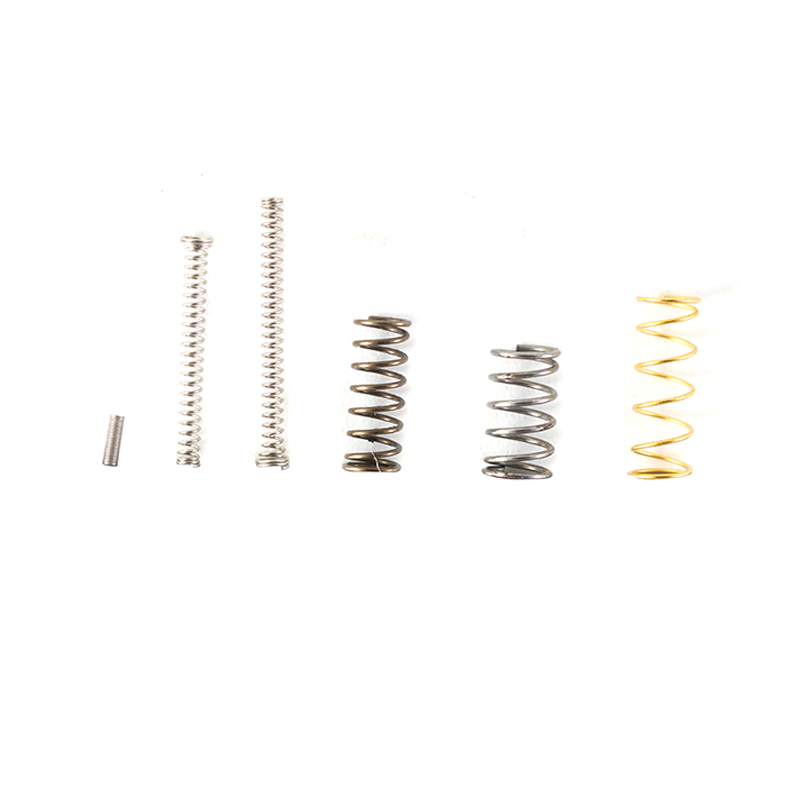
Precision compression springs are commonly integrated into assemblies that need accurate force delivery in tightly constrained spaces.
Typical application areas
- Electronics, including switches, connectors, and compact internal modules
- Automotive systems such as valves, latching mechanisms, and control units
- Aerospace components where low weight, reliability, and consistency are essential
- Medical and precision devices that rely on repeatable, controlled movement
- Industrial automation machinery requiring stable cycling and responsive mechanics
Across these use cases, even minor shifts in spring rate or dimensional tolerance can influence the behavior of the full assembly.
Core Factors That Influence Spring Performance
A compression spring performs according to more than its size alone. Several design elements work together to determine how it behaves in service.
1. Material selection
Material has a direct impact on strength, corrosion resistance, temperature tolerance, and fatigue life.
Common choices include:
|
Material
|
Typical Advantage
|
Common Use
|
|
Music wire
|
High strength and cost efficiency
|
General industrial applications
|
|
Stainless steel
|
Corrosion resistance and clean appearance
|
Medical, food equipment, electronics
|
|
Phosphor bronze
|
Good conductivity and corrosion resistance
|
Electrical and specialty components
|
|
Alloy steels
|
Strong performance under demanding loads
|
Automotive and heavy-duty systems
|
Choosing the right material helps the spring maintain reliable force over time instead of turning into a tiny metal drama queen.
2. Coil geometry
Spring geometry affects load rate, travel distance, and working stability.
Key design variables include:
- Wire diameter
- Outer and inner diameter
- Free length
- Number of active coils
- Pitch and end style
A well-balanced geometry improves force accuracy while reducing the risk of buckling, binding, or early fatigue failure.
3. Tolerance control
Precision applications often require tight manufacturing tolerances. Consistency in coil diameter, length, and spring rate supports:
- Better fit during assembly
- More predictable force output
- Lower variation between production batches
- Improved product quality control
4. Fatigue resistance
In high-cycle applications, fatigue life is a major concern. Springs that repeatedly compress and release must withstand stress without losing performance too early.
Fatigue performance is influenced by:
- Material grade
- Surface quality
- Heat treatment
- Operating stress level
- Environmental exposure
For long-cycle use, a spring should be designed around the actual working range rather than only the maximum theoretical load.
From Micro Springs to Long-Travel Designs
Different products call for distinctly different compression spring configurations. 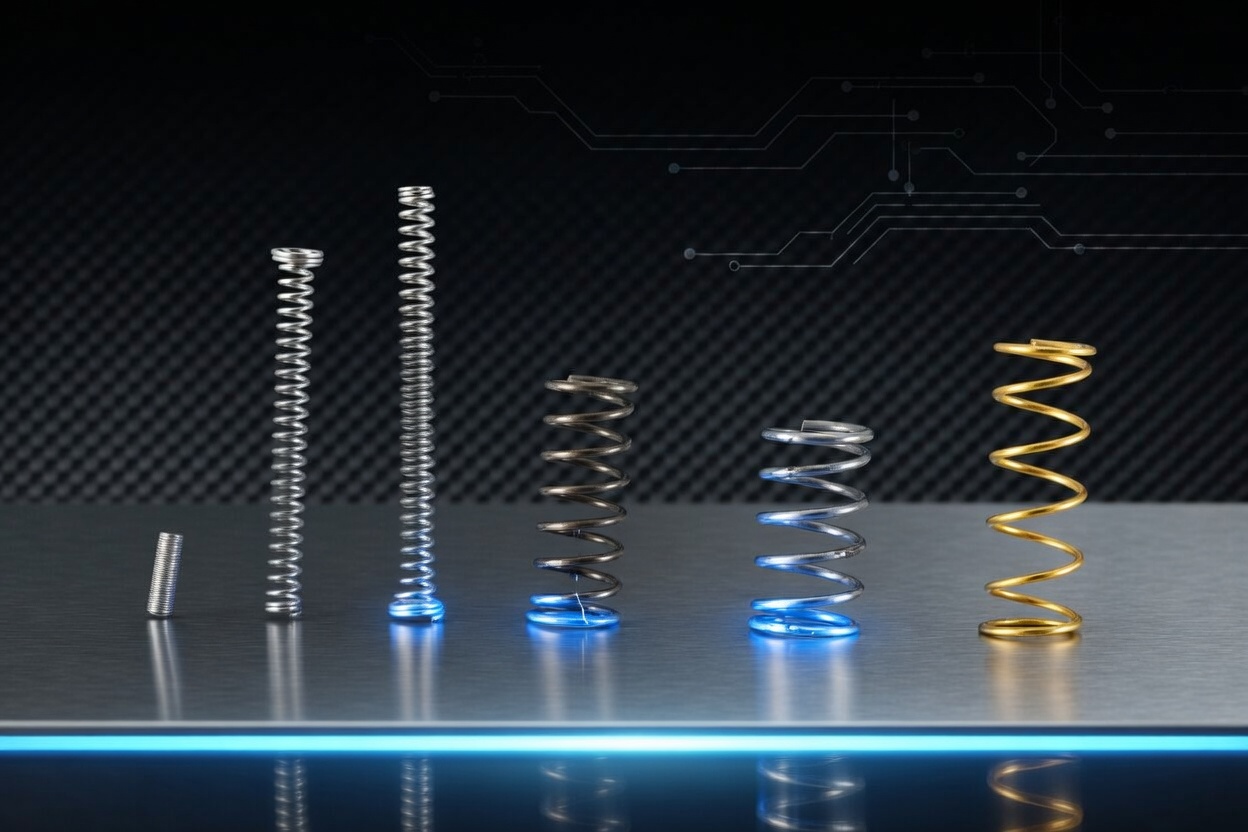
Micro compression springs
Micro compression springs are built for very small devices and tightly packaged mechanisms. They are commonly chosen when space is minimal but repeatable force output is still critical.
Typical uses:
- Electrical contacts and connectors
- Sensor assemblies
- Miniaturized medical instruments
- High-precision switch units
- Long-travel compression springs
Long-travel compression springs are better suited to continuous mechanical motion and designs that require greater deflection range.
They are frequently used in:
- Mechanical linkage systems
- Industrial equipment
- Actuator platforms
- Repeated load-handling mechanisms
The optimal spring design is determined by installation envelope, required stroke, expected cycle volume, and the intended force-deflection profile.
How Better Spring Design Supports Product Reliability
A correctly engineered compression spring delivers more than force alone. It supports the efficiency and stability of the whole mechanical system.
Practical benefits
- Cleaner, more predictable motion during use
- Stable performance across repeated compression cycles
- Lower wear transfer to nearby mechanical parts
- Stronger dimensional control in precision assemblies
- Longer working life in tough operating environments
In real terms, that leads to fewer breakdowns, more consistent assembly output, and higher finished-product quality.
Precision compression springs often set the performance floor for an entire assembly. In products where force accuracy, dimensional stability, and cycle life are non-negotiable, spring selection has a direct impact on consistency and failure rates. Whether the design requires a micro spring for a space-constrained device or a long-travel spring for industrial automation, success depends on aligning material behavior, geometry, tolerances, and fatigue strength with real operating conditions. For companies building high-performance systems, the right spring design is more than a component choice—it is a practical lever for higher reliability, tighter production consistency, and stronger long-term product value.

 English
 中文简体
中文简体 русский
 Español
 Deutsch