Catheter Guidewire Spring Industry knowledge
Catheter Guidewire Spring
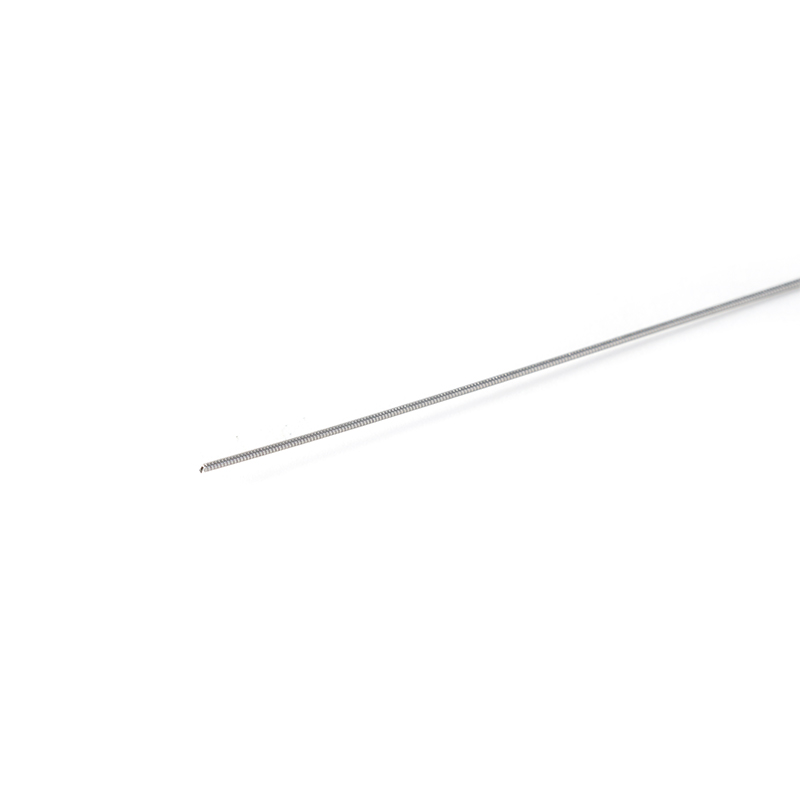
A catheter guidewire spring plays an important role in many medical navigation systems, helping doctors position devices smoothly and precisely within complex anatomical pathways. This component is designed with a flexible structure that allows the guidewire to bend and adapt to curves inside the human body while maintaining stable torque transfer. Its construction typically relies on fine stainless-steel or nitinol wires formed into uniform coils, which provide balanced resilience and controlled elasticity.
For critical procedures such as cardiovascular intervention, urinary tract access, or minimally invasive diagnostic operations, a catheter guidewire spring helps ensure that the guidewire moves with consistent responsiveness. The spring design reduces the chance of kinking by distributing stress evenly, which supports safe device advancement. Precision in coil pitch, diameter, and wire thickness is essential to achieving predictable performance. These parameters can be customized based on required stiffness levels, insertion environments, and device design requirements.
Manufacturers focused on medical-grade components often adopt advanced forming and heat-treatment techniques to achieve stable mechanical properties. Surface finishing, such as electropolishing, is frequently applied to provide smooth surfaces that interact more safely with human tissues and reduce friction during movement. As medical devices become smaller and more complex, catheter guidewire springs continue to evolve toward finer dimensions, improved elasticity control, and greater compatibility with minimally invasive systems.
Guidewire Spring Coil Component
A guidewire spring coil component is a vital structural element within many medical guidewire assemblies. Its main purpose is to deliver a balanced combination of strength, flexibility, and tactile feedback during navigation through vessels or ducts. Unlike ordinary industrial springs, these coil components require precise forming processes and very tight dimensional tolerances. Even minor variations in diameter or pitch can influence device responsiveness and steering accuracy.
The structure of a guidewire spring coil component usually consists of micro-diameter wire wound into a consistent helical pattern. This configuration allows the guidewire assembly to transmit rotational motion effectively, enabling clinicians to steer the device through challenging anatomical regions. The component must also support longitudinal movement without fatigue failure. Achieving this depends on selecting stable materials, applying proper stress-relief treatments, and maintaining uniformity throughout the coil length.
Manufacturers use CNC coiling equipment, laser cutting tools, and quality-inspection instruments to make sure that each coil meets the required geometric profile. Mechanical performance tests—such as tensile, bending, and torque assessments—are carried out to verify consistency. Medical applications may also require corrosion-resistant materials and biocompatible finishing processes. As clinical needs diversify, guidewire spring coil components can be tailored for different stiffness zones, radiopacity levels, or hybrid structures combining multiple materials.
Medical Guidewire Spring
A medical guidewire spring is designed specifically for healthcare applications where reliable navigation, controlled flexibility, and patient safety are key considerations. This type of spring forms the outer layer or structural backbone of a guidewire, supporting smooth insertion and maneuverability in diagnostic and interventional procedures. Its design integrates mechanical precision with material stability to ensure predictable behavior under continuous bending and torsional loads.
The coil used in a medical guidewire spring is typically formed from fine-gauge stainless steel, nitinol, or other biocompatible alloys. These materials help maintain elasticity while resisting deformation, even when exposed to repeated bending inside narrow vessels. Spring geometry—including coil density, wire diameter, and overall length—can be adjusted to create different performance zones. For example, a softer distal section may assist in safer entry into sensitive areas, while a firmer proximal section supports torque responsiveness.
In production, manufacturing processes emphasize consistency and cleanliness. High-precision coiling machines, proprietary forming controls, and automated inspection systems help maintain accurate specifications. Finishing methods such as polishing, coating, or micro-cleaning are often applied to improve smoothness and reduce friction. The final product is packaged and handled according to medical device standards to reduce contamination risks and ensure traceability.
Because guidewire functionality directly affects procedure outcomes, a medical guidewire spring must deliver stable mechanical behavior and reliable dimensional integrity. This component is essential in a wide range of clinical specialties including cardiology, gastroenterology, urology, and minimally invasive surgery. As technological requirements grow, medical guidewire springs continue to advance toward higher precision and more refined motion control.

 English
 中文简体
中文简体 русский
 Español
 Deutsch