Special-Shaped Spring Industry knowledge
Special‑Shaped Spring
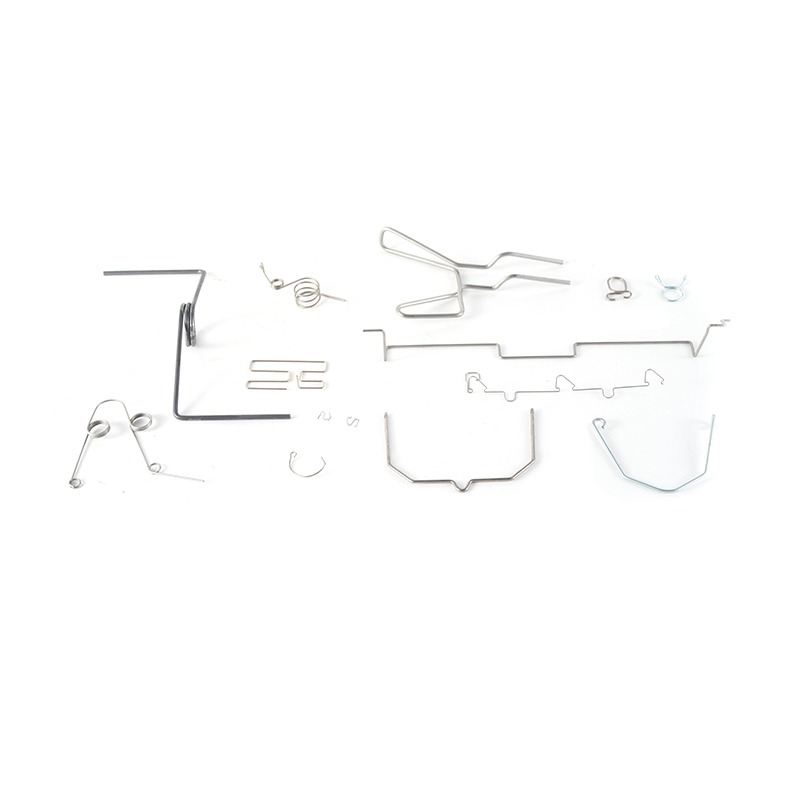
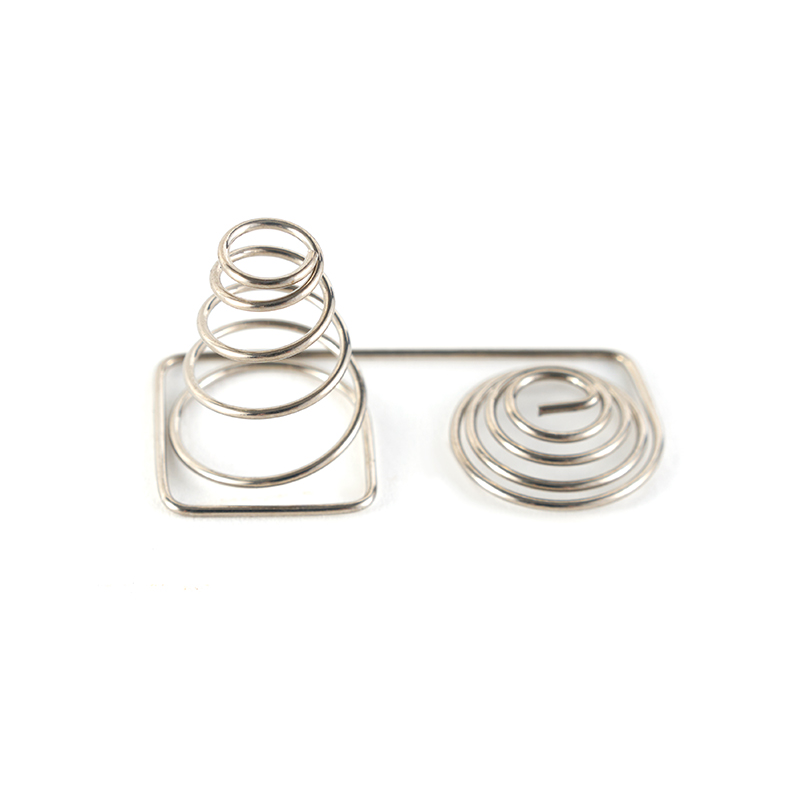
Special‑shaped springs are designed to fulfill unique requirements that conventional helical springs cannot meet. These springs can take on unusual geometries, such as conical, hourglass, or arc shapes, to fit into limited spaces or to provide variable load characteristics. In many modern applications, including automotive, electronics, and industrial machinery, engineers often need springs that can deliver tailored force patterns while maintaining reliability.
One of the main advantages of special‑shaped springs is their ability to optimize the mechanical response within compact assemblies. Conical or hourglass springs, for example, allow variable spring rates that can absorb shocks or distribute forces more evenly across the travel range. Arc and U‑shaped designs are particularly useful when components must rotate or bend within a constrained area. Manufacturers often work closely with clients to determine the ideal material, shape, and dimensions to meet precise performance and fatigue requirements.
From a production perspective, special‑shaped springs often demand advanced forming techniques and quality control measures. Designers focus on minimizing stress concentrations and ensuring consistent behavior under repeated loads. Material selection plays a critical role; high-strength alloys or corrosion-resistant materials are often chosen to achieve durability while maintaining flexibility. As industries continue to pursue miniaturization and more complex assemblies, the demand for reliably manufactured special‑shaped springs continues to grow. Companies that provide flexible design capabilities, rapid prototyping, and precise production are well-positioned to meet these evolving needs.
Spring With Special Shape
A spring with special shape refers to any spring customized beyond standard circular or cylindrical forms. These springs are created to accommodate particular mechanical constraints, such as non-linear force requirements, restricted installation spaces, or combined translational and rotational motion. Industries including medical devices, robotics, and automotive systems increasingly rely on these specialized springs to achieve complex performance objectives.
Flat‑wire wave springs, arc springs, and other non-standard configurations can reduce assembly height while preserving load capacity. This space-saving characteristic is critical in compact systems, such as electronic connectors or small mechanical actuators, where even minor dimensional improvements can impact overall functionality. Designers often collaborate with manufacturers to fine-tune parameters such as coil pitch, wire diameter, and curvature to achieve the desired load and deflection profile.
Advanced production techniques, including precision coiling, CNC bending, and stress-relief processes, ensure these springs perform consistently over repeated cycles. Engineers also pay close attention to material properties to prevent fatigue or deformation under operational conditions. With the trend toward lightweight and energy-efficient mechanical systems, springs with special shapes play an essential role in improving reliability and reducing size and weight. Manufacturers offering rapid prototyping and iterative design support can help clients implement these springs effectively while minimizing production risk.
Non‑Standard Spring
Non‑standard springs are defined by dimensions, shapes, or mechanical characteristics that fall outside conventional catalog specifications. These springs are frequently custom-engineered to meet unique application needs, such as unusual force curves, extreme temperature operation, or space-limited installations. Sectors like aerospace, electronics, and automotive often require non‑standard springs to achieve precise functionality in highly constrained environments.
Creating non‑standard springs involves careful consideration of material selection, geometry, and load distribution. Designers must balance performance with manufacturability, taking into account fatigue resistance, corrosion protection, and dimensional tolerances. Unlike standard springs, each non-standard spring may require specialized tooling or forming processes, making close collaboration between designer and manufacturer essential.
Modern engineering challenges, including miniaturization, higher operating speeds, and multi-functional assemblies, drive the need for non-standard springs. These springs are used to maintain force consistency in moving parts, provide unique deflection responses, or integrate into devices with unusual geometries. Manufacturers focusing on custom solutions and advanced testing methods can help ensure that non-standard springs meet performance expectations. By providing tailored designs, rapid prototyping, and reliable production, companies can address the growing demand for non-standard springs in applications that require precise, dependable components.

 English
 中文简体
中文简体 русский
 Español
 Deutsch