English
 中文简体
中文简体 русский
 Español
 Deutsch
ndl ndl ndl ndl ndl ndl ndl ndl ndl ndl ndl ndl ndl ndl ndl ndl
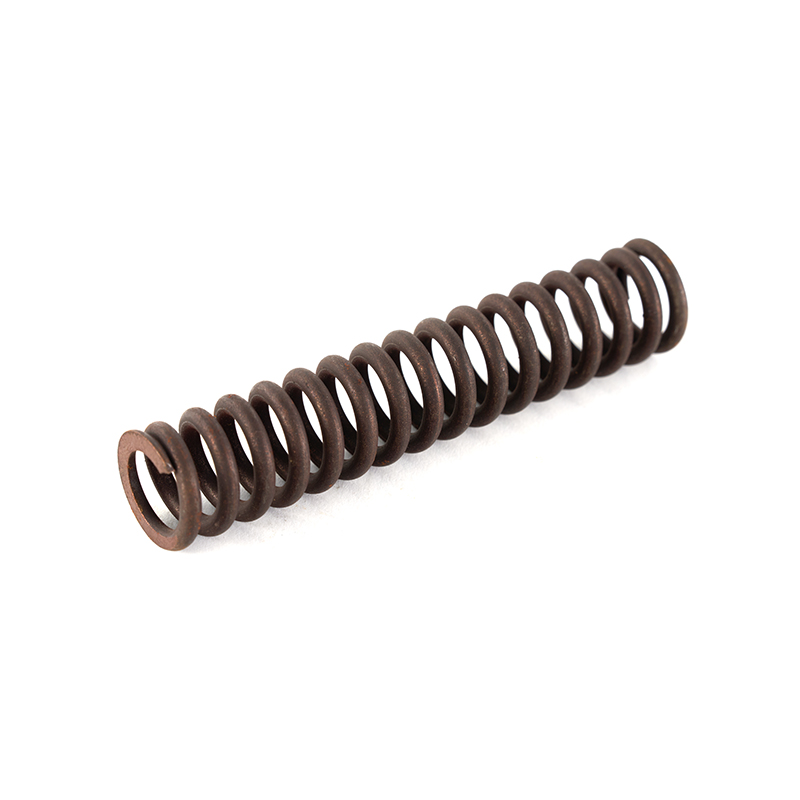
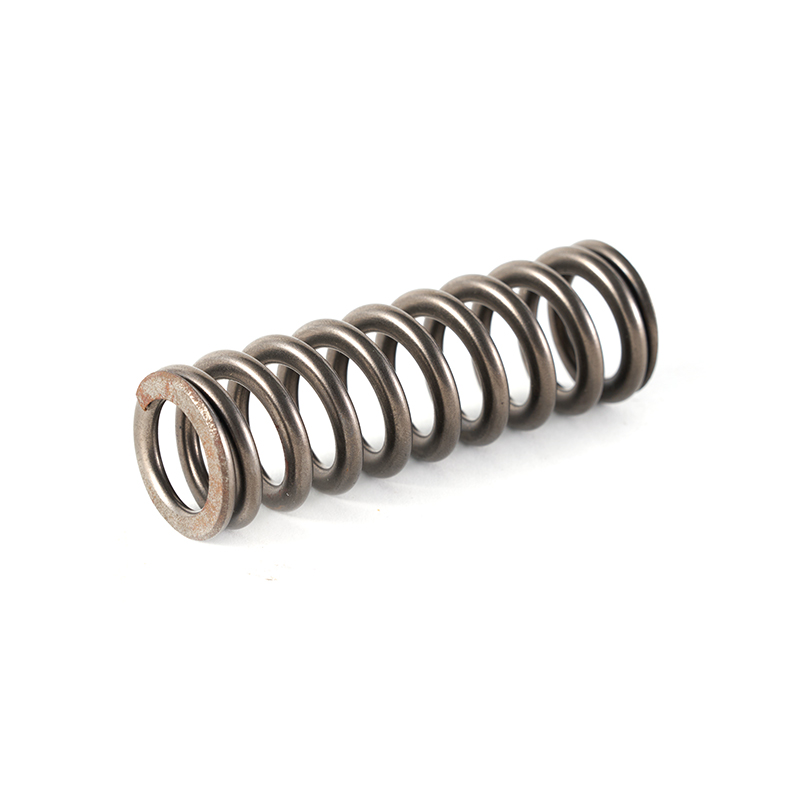
When a mechanical system starts producing inconsistent results — slight deviations in actuation, unexpected resistance variations, components wearing unevenly — the spring is often the last thing engineers check. Yet in many cases, it is exactly where the problem originates. Force output that drifts over time, tolerance gaps that compound across assemblies, fatigue behavior that was never properly accounted for during design: these are real operational costs. A Precision Compression Spring addresses these failure points at the source, and understanding how it does so is genuinely useful for anyone specifying components for systems where consistency is not negotiable.
Force output in a compression spring is not a fixed property — it is a result. It emerges from the interaction of wire diameter, coil geometry, material composition, and the precision with which all of those variables are controlled during manufacturing.
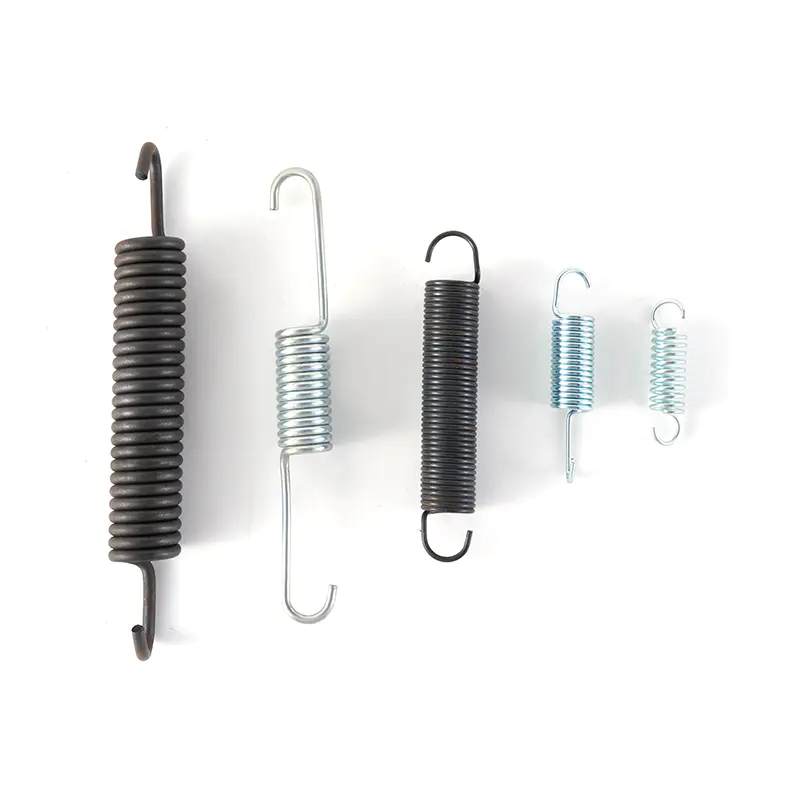
A standard spring can deliver adequate force in low-demand applications. But when a system requires repeatable mechanical response across thousands or millions of cycles, the tolerance band around each variable starts to matter enormously. Even small deviations in wire diameter alter the spring rate. Variations in coil pitch change how load distributes along the body. Inconsistent end grinding affects how squarely the spring seats — which in turn affects how force transfers to the mating component.
The factors that most directly influence stable output:
Tight tolerance control is the foundation — but it is worth being specific about why. Tolerance affects not just the spring in isolation, but the entire assembly it sits within.
Consider an automated assembly line where a compression spring controls the seating force of a valve or latch. If that spring delivers slightly different force on each cycle — within what might seem like an acceptable variance — the downstream effect accumulates. Components seat inconsistently. Wear patterns become uneven. Calibration drifts. What started as a minor spring tolerance issue eventually becomes a maintenance problem that looks like a mechanical failure somewhere else entirely.
Precision manufacturing addresses this by holding tighter bounds on every critical dimension. CNC coiling equipment can maintain far closer control over pitch, diameter, and free length than conventional winding processes. The result is a spring population where unit-to-unit variation is genuinely narrow — not just within a single batch, but across repeated production runs.
Material choice shapes everything downstream: elastic behavior, fatigue resistance, load capacity, and long-term dimensional stability. Selecting a wire grade based on cost alone, without accounting for the operating environment and cycle demands, is one of the more common sources of spring-related field failures.
Different materials behave differently under repeated stress:
The interaction between material and heat treatment is equally important. Stress relief processing after coiling helps stabilize the wire's internal structure, reducing the residual stress that would otherwise cause the spring to relax under load over time. Skip that step, and a spring that measures correctly on day one may drift measurably after extended use.
Yes — more than many engineers expect. The surface condition of a spring wire is not just a cosmetic concern. It directly affects where fatigue cracks initiate.
Fatigue failure in compression springs almost always starts at the surface. Small surface irregularities — tool marks, pits, inclusions — act as stress concentration points under cyclic loading. Over time, cracks propagate from those points inward, eventually causing the spring to fracture or lose load capacity well before its theoretical cycle life.
Shot peening is one of the more effective treatments for addressing this. The process induces compressive stress at the wire surface, which counteracts the tensile stress that drives crack growth during loading. Springs that undergo shot peening consistently show extended fatigue life under high-cycle conditions. For applications where a spring must perform reliably over an extended service period without replacement, surface treatment is not optional — it is part of the performance specification.
Not every application pushes a spring to its fatigue limits. But the ones that do tend to be exactly the applications where failure is most costly.
Automotive systems, industrial automation, medical devices, and precision electronic assemblies all share a common characteristic: the spring cycles continuously, often under varying loads, and the consequences of deviation — let alone failure — are significant. In automotive suspension or valve train components, spring behavior directly influences vehicle dynamics. In medical equipment, force consistency is tied to dosing accuracy or actuation reliability. In automated production equipment, a spring that loses consistent return force introduces timing errors that cascade through the entire process.
A compression spring designed and manufactured for fatigue resistance behaves differently from a standard unit in these environments. It holds its load values through extended cycling. It does not take a permanent set under sustained compression. Its dimensional characteristics remain stable even as operating temperatures fluctuate.
The requirements vary by sector, but the underlying demand is consistent: predictable force over time.
| Industry | Key Application | Primary Concern |
|---|---|---|
| Automotive | Valve train, suspension, clutch systems | Fatigue life, load consistency under heat |
| Medical devices | Drug delivery, surgical instruments | Force accuracy, material biocompatibility |
| Industrial automation | Actuators, fixtures, locking mechanisms | Repeatable return force, dimensional stability |
| Electronics | Connectors, switches, relay contacts | Consistent contact pressure, compact geometry |
| Aerospace | Control surfaces, locking systems | Weight-to-load ratio, extreme cycle reliability |
| Consumer appliances | Pumps, latches, controls | Cost efficiency with acceptable tolerance band |
What stands out across these sectors is that the spring's job is rarely just to push back. It is to push back with a specific, repeatable force — every time, under varying conditions, over a defined service life.
Specifying a compression spring for a demanding application involves more than selecting a wire diameter and spring rate from a catalog. The manufacturing process behind the specification matters just as much as the numbers on the drawing.
Key questions worth raising with any compression spring factory during evaluation:
These are not abstract questions. Each one maps to a failure mode that has shown up in real applications. A compression spring factory that can answer them specifically — with process documentation rather than generalizations — is demonstrating manufacturing maturity, not just production capacity.
The growth of precision spring manufacturing in China reflects broader development in industrial tooling, wire drawing technology, and quality management infrastructure. A China compression spring supplier today operates in a very different environment than a decade ago — CNC coiling equipment, coordinate measuring systems, and material traceability have become standard in facilities serving demanding export markets.
For procurement teams evaluating a China compression spring source, the relevant questions are the same as for any precision supplier: What process controls are in place? What inspection records are available? How consistent is material sourcing? Can the factory demonstrate performance validation across representative sample sizes?
Geographic origin matters far less than process capability. A well-run compression spring factory with documented quality systems can deliver components that meet tight industrial specifications regardless of location.
Modern automated systems have reduced tolerance for mechanical variability. Where a human operator might compensate for slight inconsistency in a manually operated tool, an automated system cannot. It executes the same motion, applies the same force profile, and expects the same response — every cycle.
This is why automation engineers increasingly treat spring selection as a critical design decision rather than a standard hardware choice. A spring that introduces variability into an automated sequence creates cascading problems: rejected parts, calibration intervals, unplanned downtime. The cost of that variability usually dwarfs the cost difference between a standard and a precision-grade component.
The shift toward tighter spring specifications in automated systems is not a recent trend — it has been building as production speeds increase and tolerance budgets tighten. What has changed is the visibility of spring performance as a system-level variable rather than a background component.
Stable force output from a compression spring does not happen by accident. It is the product of deliberate decisions made at every stage: wire material selection, coiling process control, heat treatment sequencing, surface finishing, and end-condition accuracy. Any one of those stages, handled without adequate precision, introduces variation that shows up as performance inconsistency in the field. For engineers and procurement teams evaluating spring components for systems where repeatability genuinely matters, the manufacturing process behind the spring is as important as the spring specification itself. Working with a supplier who can demonstrate process capability — not just quote a spring rate — is what separates reliable long-term performance from components that meet spec on paper but drift in practice. Zhejiang Ningdeli Spring Co., Ltd. brings that depth of manufacturing discipline to Precision Compression Spring production, offering engineering teams a sourcing partner with the process controls and quality documentation that demanding applications require. If your current spring specification is not delivering the consistency your system needs, it is worth having a conversation about what a precision-focused manufacturing approach can change.

QUICK LINKS
PRODUCTS
If you have any questions, please get in touch with us.
Tel: +86-13626772101
WhatsApp: +86-13626772101
Add: Ningdeli Spring, Danxi First Industrial Zone, Danxi Town, Yueqing City, Zhejiang

Wholesale Springs Manufacturer