English
 中文简体
中文简体 русский
 Español
 Deutsch
ndl ndl ndl ndl ndl ndl ndl ndl ndl ndl ndl ndl ndl ndl ndl ndl
The spring specification passed through the design review without much discussion — it was, after all, just a spring. Then the assembly started showing inconsistent performance: force outputs varying between units, cycle counts falling short of design targets, occasional premature fatigue in components that should have outlasted the surrounding hardware. For engineers and procurement teams who have been through this sequence, the retrospective conclusion tends to be the same: the application needed a Precision Compression Spring , and it got something that looked dimensionally similar but performed quite differently under sustained load. Understanding where that performance gap comes from — and how to identify in advance which applications need precision specifications — is what prevents the problem from recurring.
The answer is not simply that one is made more carefully than the other. The difference is structural: it runs through the manufacturing process, the quality control approach, the material selection, and the dimensional tolerances that are held and verified during production.
A standard compression spring is manufactured to tolerances that are acceptable for applications where variation in spring rate, free length, and end configuration does not significantly affect the downstream system. The production process is efficient, cost-controlled, and entirely appropriate for the vast majority of spring applications — consumer products, general industrial machinery, non-critical assemblies where small force variations have no functional consequence.
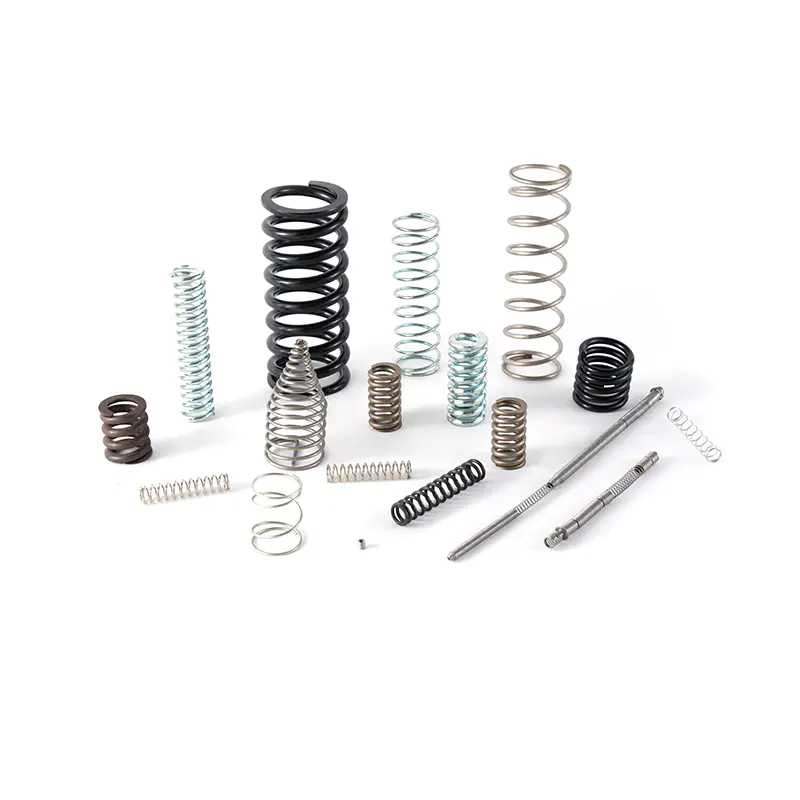
A Precision Compression Spring is manufactured to specifications where the tolerances on free length, wire diameter, coil pitch, squareness, and spring rate are substantially tighter. Each of these dimensional parameters affects how the spring behaves under load. When they vary outside controlled limits, the spring's force output changes — sometimes in ways that are measurable in testing, sometimes in ways that only become visible over tens of thousands of cycles when cumulative variation amplifies.
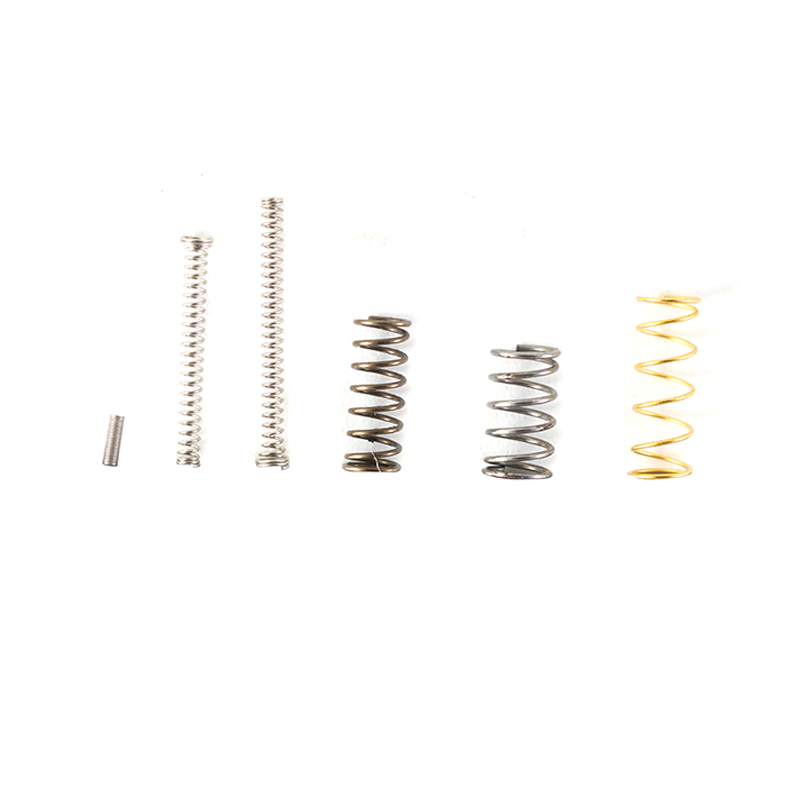
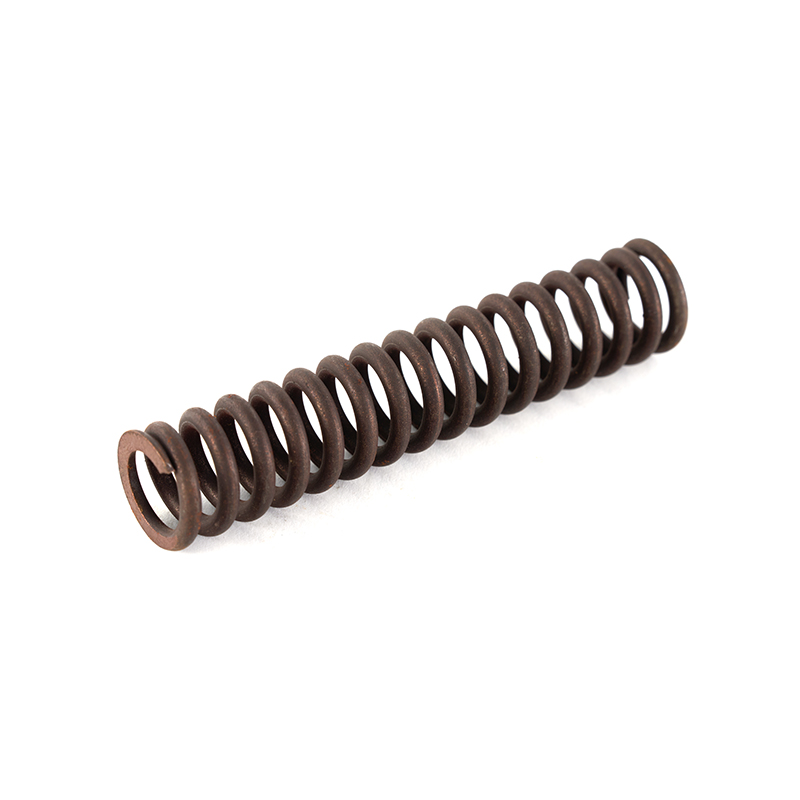
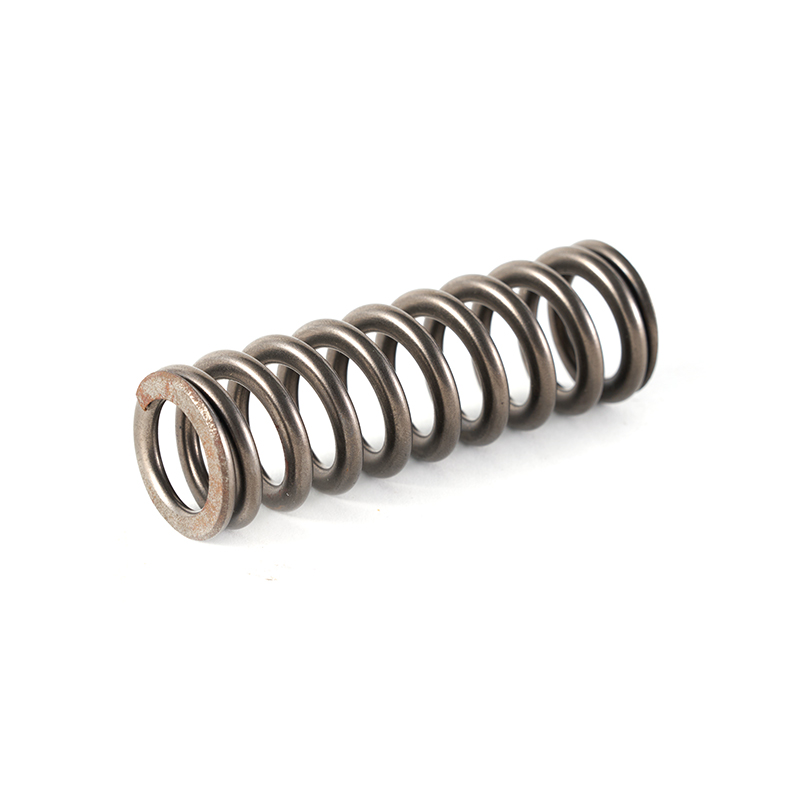
The practical difference between them is not visible in a photograph. It shows up in testing, in assembly, and — most consequentially — in field performance over the life of the product.
Tolerance is an abstract concept until it materializes in a concrete performance problem. Understanding the mechanism through which dimensional variation translates into functional inconsistency is useful for anyone making the precision vs. standard decision.
Free length variation: The free length — the length of the spring with no load applied — determines the preload the spring exerts when installed in a fixed housing. If free length varies between springs in the same batch, the preload varies between individual assemblies. In applications where a consistent preload is required for reliable valve seating, switch actuation, or clamping force, this variation creates performance inconsistency across units that share the same design but use different spring instances.
Wire diameter consistency: The wire diameter determines the spring's stiffness — the force required to compress it a given distance. Wire that varies in diameter along its length, or between production batches, produces springs whose spring rate drifts from the specified value. Precision spring wire is produced to tighter diameter tolerances and tested more rigorously than general commercial wire. This does not make it a different material — it makes it a more consistent one.
Coil pitch uniformity: Pitch — the spacing between adjacent coils — affects how load distributes along the spring body during compression. Uneven pitch produces uneven load distribution, which concentrates stress in certain sections of the spring. Concentrated stress in a repeating fatigue application accelerates the fatigue process and shortens the spring's useful life below what the material properties would otherwise permit.
Squareness and parallelism of ends: Springs with ends that are not square to the coil axis apply off-axis forces to the mating components. In precision assemblies where side loading of a plunger, a valve stem, or a sliding contact is unacceptable, this geometric variation creates functional problems that a dimensional inspection of the spring in isolation would not identify.
This is the question that matters for the procurement decision — not whether precision springs are generally more reliable, but whether the specific application's performance requirements fall inside or outside what standard tolerances reliably deliver.
Applications where Precision Compression Springs are the appropriate choice:
Applications where standard compression springs are appropriate:
The key diagnostic question is not how demanding the application is overall — it is how sensitive the specific spring function is to force variation and dimensional inconsistency. A very sophisticated machine may use both standard and precision springs in different positions depending on what each spring is doing.
| Dimension | Standard Compression Spring | Precision Compression Spring |
|---|---|---|
| Free length tolerance | Wider allowable variation | Tightly controlled within specification |
| Wire diameter consistency | Commercial grade wire | Precision wire with verified diameter consistency |
| Spring rate variation | Acceptable range for general use | Controlled to closer limits for consistent force output |
| Coil pitch uniformity | Functional but not closely controlled | Consistent pitch reduces localized stress concentration |
| End squareness | Within general commercial standards | Controlled for applications requiring axial load alignment |
| Fatigue life | Suitable for moderate cycle applications | Suitable for high-cycle demanding applications |
| Material certification | Standard material traceability | Full material certification often available |
| Unit cost | Lower per-unit production cost | Higher per-unit cost reflects tighter manufacturing requirements |
| Suitable applications | General industrial, consumer products | Medical, aerospace, precision automation, instruments |
The comparison is not a ranking — both categories are correctly specified within their appropriate use contexts. The cost premium of precision production is only justified where the performance requirements cannot be met by standard tolerances.
Material is a separate variable from precision, and it is worth distinguishing between them. A spring can be manufactured to tight precision tolerances from several different alloy options, and the choice of material affects performance characteristics that are distinct from dimensional precision.
Common material options and their relevant properties:
The manufacturing steps that produce a Precision Compression Spring are, at their core, the same as those that produce a standard one — wire forming, coil winding, heat treatment, grinding, and surface treatment. What differs is how tightly each step is controlled and how thoroughly the output is verified.
Incoming material verification: Precision spring production typically starts with incoming wire inspection — confirming that the wire diameter is within specification before production begins. Standard spring production may rely on mill certifications without batch verification.
Process control during coiling: Precision coiling uses closer machine setups and more frequent in-process measurement than standard production. Coil diameter, pitch, and free length are monitored and adjusted during a production run rather than only checked at final inspection.
End grinding: Ground ends — where the spring end coils are machined flat — are standard on precision springs for applications requiring axial load alignment. The squareness and parallelism of ground ends are measured against tolerance specifications.
Load testing: Many precision spring specifications require load testing of each spring or a statistically controlled sample, confirming that the spring's force output at a specified compressed length falls within the tolerance band. Standard springs may not be load-tested at all — they are produced to dimensional specifications and the load performance is inferred from those dimensions.
Full traceability: Precision spring production for regulated industries (medical, aerospace) typically includes full material and process traceability — the ability to trace any spring back through its production batch to the original wire source. This traceability is a production overhead that adds cost but is non-negotiable in regulated applications.
Catalog precision springs cover a wide range of sizes and spring rates, but precision applications frequently require configurations that are not available from stock. The wire diameter, coil diameter, free length, and end configuration combination that an application actually needs often falls between standard sizes, or requires a spring rate that no off-the-shelf product delivers.
Custom precision spring production addresses this by manufacturing to the engineer's specification rather than to a catalog offering. This is more expensive per unit than purchasing standard stock but less expensive — often substantially — than the alternative of redesigning the mechanical assembly to accommodate a spring that is available from stock but not quite right for the application.
For OEM product manufacturers, custom spring production also provides supply chain certainty: the spring specification is locked to the product design rather than to whatever happens to be available in catalog inventory. Changes to catalog offerings over time do not affect a custom-specified component in the same way they affect a design built around a stock item.
The qualification process for custom precision springs — engineering review, sample production, performance testing against specification, formal approval — takes more time than ordering from stock. For time-sensitive programs, engaging a spring manufacturer early in the design process rather than at the end of it is the approach that avoids schedule impact.
The cost comparison between standard and precision springs should account for more than the unit purchase price. In applications where the spring's performance affects the reliability of the overall system, the cost of the spring needs to be weighed against the cost of failures it prevents.
A standard spring that introduces performance variation into a precision assembly increases the reject rate during end-of-line testing. The cost of that reject rate — labor, scrap, rework, schedule impact — is a real cost that does not appear on the spring procurement line but is causally connected to it.
A standard spring in a high-cycle application that fails before design life creates field returns, warranty claims, and potentially customer safety incidents. Again, the costs are real and large relative to the spring unit price.
Precision springs cost more per unit. In applications where standard tolerances reliably meet the performance requirement, that premium buys nothing of value. In applications where standard tolerances introduce meaningful failure risk, the premium is a fraction of the cost it prevents. Identifying accurately which category an application falls into is the selection judgment that makes the specification decision rational rather than instinctive.
Precision spring production is not a standard capability shared equally across all spring manufacturers. The equipment precision, process control maturity, inspection capability, and quality management systems required to consistently meet tight tolerances represent a genuine manufacturing investment that separates capable suppliers from those who can produce the spring dimensionally but cannot verify it reliably.
For engineers and procurement teams specifying Precision Compression Springs for demanding applications — particularly in medical, automation, or high-cycle industrial contexts — the supplier's production verification capability matters as much as the spring specification itself. A spring manufactured to the right specification by a manufacturer who cannot verify its own output against that specification is a known risk that shows up in assembly and in the field.
Zhejiang Ningdeli Spring Co., Ltd. manufactures compression springs across standard and precision grades, supporting custom specification development for OEM and industrial customers. For engineering teams evaluating spring options for precision-sensitive applications, or procurement teams looking to establish a reliable supply source for custom or precision spring requirements, reaching out to discuss the application specification — force requirements, cycle targets, installation geometry, and industry standards — is the practical starting point for getting the spring right before it reaches the assembly line.

QUICK LINKS
PRODUCTS
If you have any questions, please get in touch with us.
Tel: +86-13626772101
WhatsApp: +86-13626772101
Add: Ningdeli Spring, Danxi First Industrial Zone, Danxi Town, Yueqing City, Zhejiang

Wholesale Springs Manufacturer