English
 中文简体
中文简体 русский
 Español
 Deutsch
ndl ndl ndl ndl ndl ndl ndl ndl ndl ndl ndl ndl ndl ndl ndl ndl
Engineers and product designers who need to specify a spring for a mechanical system often find that the basic question — how does a compression spring actually work — leads quickly into questions about spring rate, load capacity, fatigue life, and the difference between a standard coil and a Precision Compression Spring built to tight tolerances. Understanding the underlying mechanics is not just academic. It determines whether the spring specified for a device will perform correctly under real operating conditions, hold its characteristics across many cycles, and avoid the kind of failure modes that only show up after the product has left the factory.
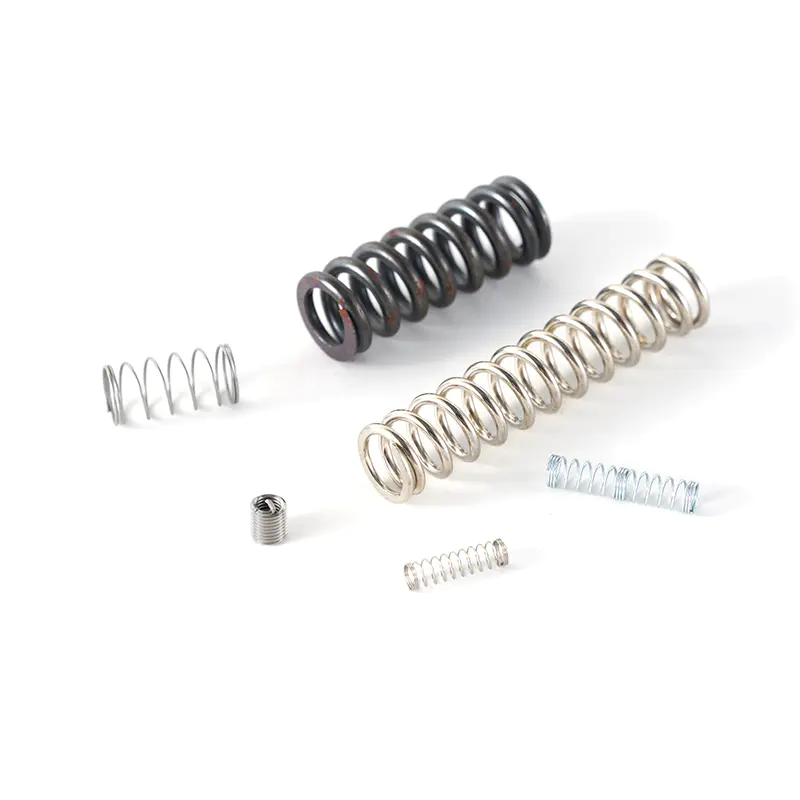
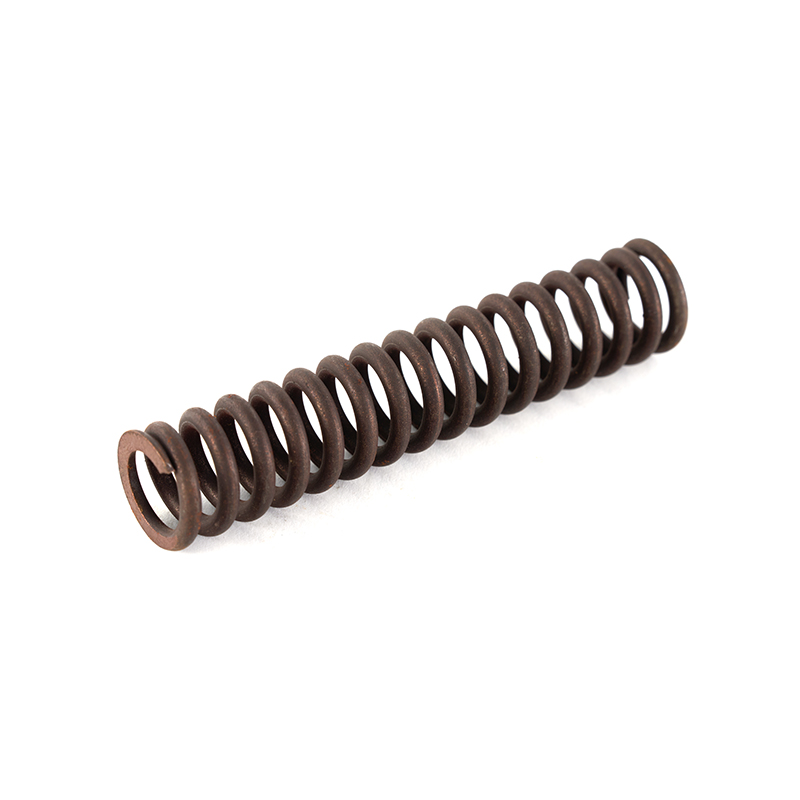
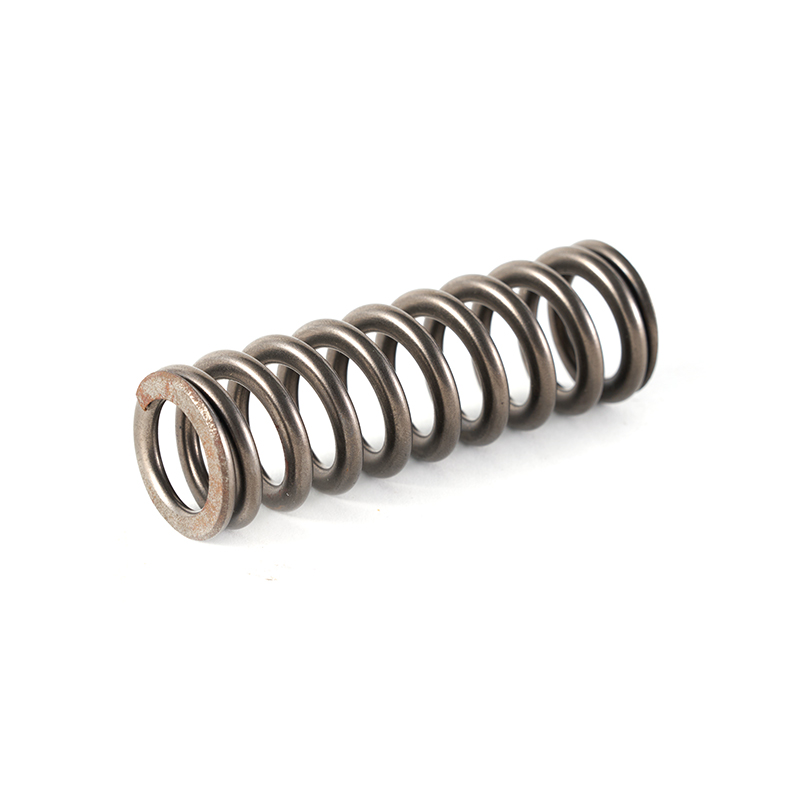
When a load is applied along the axis of a compression spring — pushing the two ends toward each other — the coils deflect. The wire that forms the coil undergoes torsional stress as the spring compresses. When the load is removed, the wire's elastic properties drive the coils back to their original spacing. The spring has stored mechanical energy in its deformed state and releases it as the load is removed.
This is the fundamental cycle: apply force, store energy, release energy. What makes it useful in mechanical systems is that this cycle can be repeated many thousands or millions of times without permanent change to the spring's geometry — provided the spring is not loaded beyond its elastic limit.
The relationship between force and deflection follows a predictable pattern in a well-designed spring: double the force, and the deflection approximately doubles. This proportionality is what makes a spring a reliable and calculable component rather than an unpredictable one.
The spring constant — often written as k — is the ratio of force applied to deflection produced. A spring with a high k value is stiff: it takes significant force to compress it even a small distance. A spring with a low k value is soft: it deflects considerably under a modest load.
In practice, the spring constant is not a single number pulled from a catalog. It is a function of the spring's physical geometry:
When a Precision Compression Spring is specified, the spring constant needs to fall within a defined tolerance range — not just nominally correct, but consistently correct across the production batch. A spring that is nominally within specification but varies widely between units creates inconsistent behavior in the assembled device.
When a compression spring deflects under load, the energy delivered by that load does not disappear. It is stored in the elastic deformation of the wire. This stored energy is what drives the spring back to its free length when the load is removed — the spring is releasing the energy it absorbed during compression.
The amount of energy stored increases with both the spring constant and the square of the deflection. A spring compressed twice as far stores four times the energy at the same stiffness. This relationship has practical implications for system design:
In precision instruments and medical devices, this energy characteristic is not incidental — it is part of the functional specification. The spring is doing work, and the consistency of that work across operating conditions and across many cycles determines the reliability of the function it enables.
A compression spring that performs well in service is the result of coordinated decisions across several geometric and material parameters. None of these can be treated in isolation:
Both, depending on how it is loaded. The two primary failure mechanisms in compression springs are fatigue and permanent set.
Fatigue failure occurs when a spring is subjected to cyclic loading — repeated compression and extension — at stress levels that exceed what the material can sustain over many cycles. The crack typically initiates at a surface defect or at a point of stress concentration in the wire, then propagates until the spring fractures. Fatigue failure is the failure mode of concern in high-cycle applications: valve springs, actuator return springs, and anything operating continuously.
Permanent set occurs when a spring is compressed beyond its elastic limit. The wire deforms plastically rather than elastically, and when the load is removed, the spring does not return to its original free length. The spring is now shorter, its spring constant may have changed, and it may no longer produce the designed load at the working deflection. In a precision assembly, this means the device no longer performs to specification.
Buckling is a third failure mode specific to long, slender springs under high loads. A spring whose free length is substantially greater than its diameter can deflect laterally rather than axially under compression, losing its load capacity and potentially jamming in the housing. This is why long springs often require a guide pin or housing bore to maintain axial alignment.
How different compression spring configurations compare across the factors relevant to precision mechanical applications:
| Spring Type | Spring Rate Behavior | Typical Application | Key Advantage | Key Limitation |
|---|---|---|---|---|
| Cylindrical uniform pitch | Linear, consistent | General industrial, instruments | Predictable load curve | Fixed rate throughout deflection |
| Conical spring | Progressive (rate increases) | Anti-vibration, suspension | Low solid height | More complex to specify |
| Variable pitch cylindrical | Progressive | Automotive, load-sensitive mechanisms | Dual-rate behavior | More complex manufacturing |
| Barrel / hourglass | Progressive, lateral stability | High-load, compact housing | Reduced buckling tendency | Size-specific |
| Miniature precision spring | Linear, tight tolerance | Medical, electronics, instruments | High consistency per unit | Limited load range |
For applications requiring a consistent, predictable load curve and repeatable behavior across a production batch, the standard cylindrical uniform-pitch design with tight dimensional tolerances is the configuration that supports reliable assembly performance.
It does, in several ways that matter in real applications. The elastic modulus of the wire material determines the spring constant for a given geometry. A material with a higher modulus produces a stiffer spring from the same coil geometry than one with a lower modulus. Beyond modulus, material affects fatigue life, corrosion resistance, and operating temperature range.
Common materials for precision compression springs and their application fit:
Material selection is a decision that needs to happen early in the spring specification process, not as an afterthought. It affects the geometry needed to achieve the target spring rate, the processing requirements during manufacturing, and the cost of the finished component.
The term precision in a spring context refers to tolerance. A precision spring is manufactured to tighter dimensional and load tolerances than a standard commercial spring. This matters when:
China Compression Spring manufacturers who specialize in precision work maintain tighter controls on wire diameter consistency, coil geometry, end configuration, and post-processing (such as shot peening for fatigue life enhancement or heat treatment for set resistance) than general-purpose spring producers. For buyers sourcing from a compression spring factory, the relevant question is not just whether the factory can produce the nominal specification, but whether they can maintain that specification consistently across production volumes.
A compression spring that works reliably in service is the result of correctly understood mechanics, appropriate material selection, and manufacturing that holds the specified tolerances across production. The physics of spring behavior is well established — the variables of geometry, material, and load cycle are all calculable. Where the practical challenge lies is in finding a manufacturing partner whose process capability matches the tolerance requirements of the application, and whose quality system ensures that the spring delivered in the hundredth production run performs the same as the one in the sample approval. For mechanical engineers, product designers, and procurement teams specifying Precision Compression Springs for industrial, medical, instrument, or electronics applications, Zhejiang Ningdeli Spring Co., Ltd. operates as a compression spring factory with capability across a range of wire materials, coil geometries, and tolerance levels for precision and standard applications. Contacting their engineering team to discuss spring rate requirements, material selection, batch tolerance specifications, or China compression spring sourcing arrangements is a practical step toward verifying that their manufacturing capability fits your application requirements.

QUICK LINKS
PRODUCTS
If you have any questions, please get in touch with us.
Tel: +86-13626772101
WhatsApp: +86-13626772101
Add: Ningdeli Spring, Danxi First Industrial Zone, Danxi Town, Yueqing City, Zhejiang

Wholesale Springs Manufacturer