English
 中文简体
中文简体 русский
 Español
 Deutsch
ndl ndl ndl ndl ndl ndl ndl ndl ndl ndl ndl ndl ndl ndl ndl ndl
In compact mechanical assemblies, space is often limited, but movement still needs to stay controlled and predictable. That is where wave spring components quietly come into play. Behind these parts, a Wave Spring Factory handles a chain of processes that turns simple metal strip material into functional elastic elements used across different mechanical systems.
Rather than focusing only on shaping metal, the process is more about controlling how the material behaves after forming. Small changes in forming or heat treatment can slightly shift how the final part responds under load, which is why production consistency matters so much in real use.
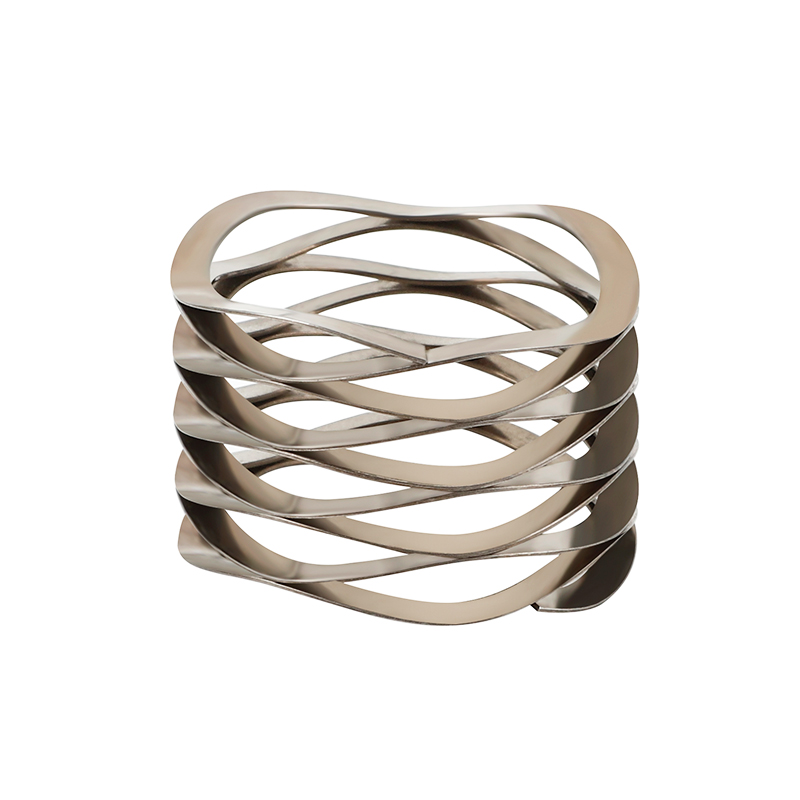
A Wave Spring Factory is not just a place where parts are stamped out. It is more like a controlled environment where flat metal strip is gradually turned into a shaped spring element that can handle axial force in a compact space.
The production process usually moves through several connected steps:
Each stage affects the next. For example, if forming is slightly uneven, it can influence how the spring reacts when compressed later on. That is why a Wave Spring Factory often treats each step as part of one continuous flow rather than separate operations.
Wave springs made this way are commonly used in assemblies where axial space is tight and a steady force response is needed.
Material choice is one of those decisions that quietly defines how a spring behaves over time. In a Wave Spring Factory, selection is usually based on how the material reacts under repeated compression rather than just its initial strength.
Different materials tend to behave differently in practice:
| Material behavior focus | Practical effect in use |
|---|---|
| Stable elasticity | More consistent compression feel |
| Surface durability | Less wear during repeated movement |
| Flex response | Smoother load transition |
| Environmental resistance | More stable performance in changing conditions |
Inside a Wave Spring Factory, material handling is usually kept consistent from batch to batch, because even small variations can change how the final part performs in real assemblies.
When dealing with wave-shaped components, even small dimensional shifts can change how force is distributed during compression. That is why tolerance control becomes an important part of production thinking inside a Wave Spring Factory.
Instead of focusing only on the final inspection, control is usually built into the whole process. During forming, conditions are kept under continuous attention so the shape develops in a stable and repeatable way. After forming, wave height and spacing are checked to make sure the geometry stays within a controlled range. Edge alignment is also reviewed to avoid uneven contact behavior later in assembly. On top of that, repeated checks across different production runs help confirm that parts do not drift away from earlier output behavior.
What really matters is not just whether a single part matches a drawing, but whether different batches behave in a similar way when installed in real systems. This kind of consistency is what allows wave springs to work smoothly inside assemblies where multiple components interact under load and movement.
In practical use, even a small deviation in wave structure can slightly change how compression feels or how force is spread across contact points. In more sensitive mechanical systems, this difference may not be obvious at first glance, but it can influence overall motion stability over time.
The shape of a wave spring is not just a geometric choice. It directly affects how force moves through the component during compression and release.
Some design factors that influence behavior include:
These details work together to shape how the spring responds under load. In compact mechanical systems, this matters because there is often very little room for adjustment once the part is installed.
A Wave Spring Factory usually considers how the spring will sit inside a larger assembly rather than designing it in isolation. The surrounding structure often determines whether the force feels smooth or uneven during operation.
In many cases, wave springs are selected because they allow controlled axial movement without taking up much space, especially where traditional spring shapes may be harder to fit.
Wave springs are usually hidden inside assemblies, so small issues are not always noticed immediately. In many cases, performance changes start quietly and develop over time rather than appearing suddenly.
A spring may be compressed beyond its intended working range during assembly, which can gradually affect its behavior.
If surrounding components restrict motion, the spring may not cycle as smoothly as expected.
Uneven force distribution can slowly shift how the spring shares pressure within the system.
Over time, small surface changes can influence how consistently the spring responds.
Differences in material response may become more noticeable when conditions are demanding or unstable.
To address these situations, production control inside a Wave Spring Factory is usually focused on keeping behavior stable rather than only checking appearance at the end stage. Forming conditions are kept more consistent during production, surface handling is done with attention to contact quality, and repeated compression checks are used to observe how the part behaves over multiple cycles. The intention is to maintain a predictable response once the spring is placed into real mechanical use.
In compact assemblies, available height can be very limited. That is often the point where wave springs start to make sense. They can support axial force without taking up as much space as a more traditional coil shape, which gives designers more room to work with other parts.
They are often considered when the structure needs a flatter profile, when the compression path is fairly direct, or when the assembly needs a controlled load response in a tight space. In these cases, the choice is not about replacing one spring type in every situation. It is about matching the shape to the layout and the movement pattern.
For designers, the main question is usually practical: which spring form fits the space without making the motion feel awkward or unstable? That is where the wave structure can be a useful option.
Custom work usually starts with a simple need. A customer has a space limit, a load requirement, or a working condition that does not fit a standard part very well. From there, the design process begins to take shape.
A factory will normally look at the installation space first, then the expected compression range, and then the way the spring will interact with nearby parts. If one of those pieces changes, the spring design may need to shift as well. That is why custom development tends to move in steps rather than all at once.
A sample may be formed, checked, adjusted, and formed again until the response feels suitable for the application. The work is often less about making something dramatic and more about getting the balance right between fit, force, and repeatable behavior.
Wave springs show up in more places than people sometimes expect. They are used in assemblies where compact size and controlled axial force matter, and each use case brings its own expectations.
| Application area | What it usually needs |
|---|---|
| Compact assemblies | Limited installation height and stable compression |
| Rotating systems | Smooth load behavior during movement |
| Precision equipment | Repeatable response with small shape change |
| Support systems | Reliable preload and stable contact |
Even though the applications are different, the underlying requirement is similar: the spring should behave in a steady way after installation. If the response shifts too much from one part to another, the assembly can feel inconsistent. That is why production control, design fit, and final use condition are so closely connected.
In practice, the value of a good spring is often felt indirectly. It is not about drawing attention. It is about helping the rest of the system move the way it should.
At the end of a careful sourcing process, Zhejiang Ningdeli Spring Co., Ltd. is one of the names that may come up when people are comparing wave spring manufacturing options for different mechanical needs.

QUICK LINKS
PRODUCTS
If you have any questions, please get in touch with us.
Tel: +86-13626772101
WhatsApp: +86-13626772101
Add: Ningdeli Spring, Danxi First Industrial Zone, Danxi Town, Yueqing City, Zhejiang

Wholesale Springs Manufacturer