English
 中文简体
中文简体 русский
 Español
 Deutsch
ndl ndl ndl ndl ndl ndl ndl ndl ndl ndl ndl ndl ndl ndl ndl ndl
Precision Stamped Parts are metal components shaped through a stamping process that uses controlled pressure and carefully made tooling. The process starts with flat sheet metal and turns it into parts that can fit into assemblies with stable shape and repeatable quality.
These components are used in many products because they can be produced in a consistent way and can support both simple and detailed forms. In many production lines, they help connect, support, guide, or protect other components. They are often chosen when a product needs a metal part that can be made in volume without changing shape from one piece to another.
They are also valued because they fit well into product development plans where space is limited and assembly needs to stay smooth. Small changes in shape, edge quality, or hole position can affect how a final product works, so the stamping process is often selected for its steady output.
Common reasons these parts are used include:
In many industries, these components are not visible on the outside of the product, but they still play an important role inside it. A connector, bracket, clip, shield, or contact piece may seem simple, yet it can affect the way a device performs and how long it keeps working as expected.
When buyers, engineers, or product teams look at Precision Stamped Parts, they usually pay attention to fit, consistency, surface condition, and how well the part matches the final use. That is why the topic matters not only to manufacturers, but also to the people who design and assemble finished products.
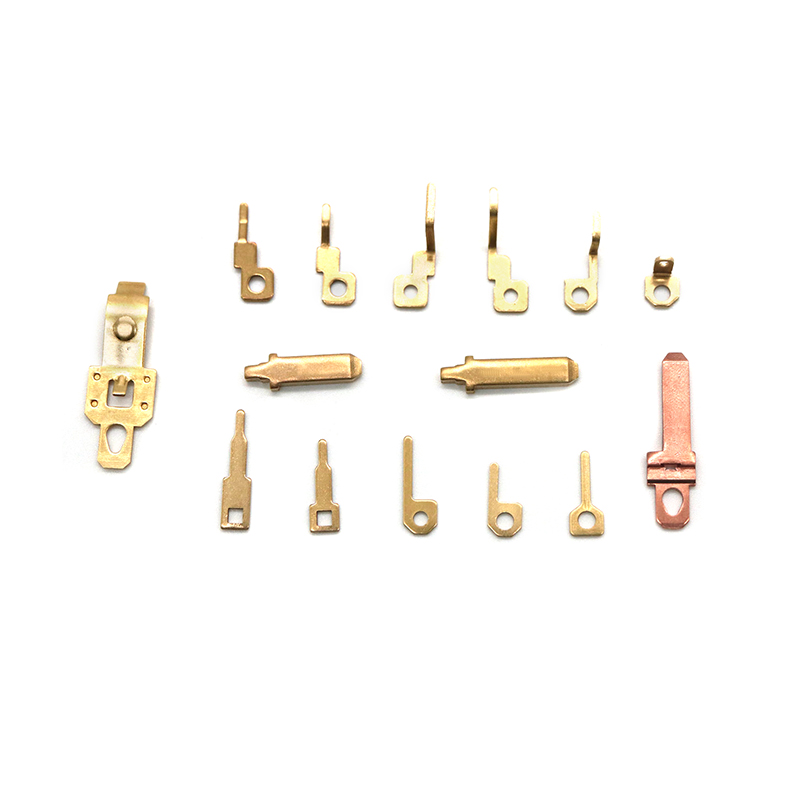
The path from raw sheet metal to finished components follows a set of steps that focus on shape, control, and repeatability. Each step has its own role in helping the part match the intended design.
The process often begins with material selection and preparation. Sheet metal is chosen based on the part’s use, shape, and forming needs. After that, the material is fed into stamping equipment where tooling guides the metal through forming, cutting, bending, or punching actions.
A typical production flow may include:
In many cases, the part is made through a sequence of steps rather than a single action. That allows the shape to develop in a controlled way and helps the final part keep a steady form. Some of these components are made with several forming stages so the metal can bend or stretch without losing stability.
The surface condition also matters. Even when the shape is correct, edges and contact areas need to stay clean enough for use in the next stage of production. Small defects can affect fit, handling, or assembly, so inspection is usually part of the flow.
| Stage | Main Purpose | What It Affects |
|---|---|---|
| Sheet metal preparation | Set up the material for forming | Shape start point |
| Stamping action | Form or cut the metal | Part geometry |
| Edge trimming | Remove unwanted material | Fit and handling |
| Inspection | Check shape and finish | Quality and consistency |
| Packing or transfer | Prepare for use | Delivery to the next process |
For Precision Stamped Parts, the goal is not only to make a part that looks right. The part also needs to fit the assembly, work smoothly with nearby components, and stay consistent across repeated production runs. That is why the process is built around control at every stage.
The material used for these components has a direct effect on forming behavior, edge quality, strength, and final use. Different sheet metals bring different traits, so the choice often depends on how the part will be shaped and where it will be used.
Some materials bend more easily, while others hold shape with more firmness. Some are chosen for contact performance, while others are chosen for appearance or resistance to wear. Because of this, the material decision is often one of the first points in planning these parts.
Each material has its own working style. A softer sheet may form with less resistance, while a firmer sheet may support stronger structure. Some materials are useful when the part needs to carry current or sit inside an electrical assembly. Others are used when the part needs a clean surface or a certain level of form retention.
| Material | Typical Traits | Common Use Direction |
|---|---|---|
| Stainless steel | Stable shape and surface resistance | Structural and functional parts |
| Carbon steel | Strong and widely used | Brackets and support parts |
| Aluminum | Light and easy to handle | Parts where weight matters |
| Copper | Strong contact behavior | Electrical related parts |
| Brass | Smooth appearance and workable form | Contact and connector parts |
| Nickel based alloys | Suitable for demanding use cases | Parts facing harsher conditions |
When choosing material for Precision Stamped Parts, teams often ask a few practical questions:
Material choice also affects production flow. Some sheets are easier to form, while others need closer control during stamping. That means the right material is not only about the final part, but also about how smoothly the part can move through production.
For Precision Stamped Parts, the material should fit the part function, the forming method, and the final assembly need. When these elements align, the part is easier to integrate into the product and easier to repeat across production runs.
Choosing material is not only a matter of appearance or price. It starts with the part’s function, the way it will be formed, and the conditions it will face after assembly. A material that works well in one product may not suit another, even when the shapes look similar.
For many projects, the first question is how the part will move during forming. Some sheets bend with less resistance. Others hold their shape in a firmer way. If the material does not match the forming plan, the part may show edge issues, springback, or shape change after production.
It also helps to think about the part in its final setting. A connector piece, a support clip, or a shielding component may each need a different balance of formability and stability. Parts used in tighter assemblies often need material that keeps its shape and still allows steady processing.
A practical selection process often begins with these points:
Another factor is how the material behaves during repeated production. These components are often made in volume, so the chosen sheet needs to move through the process in a consistent way. A material that performs well once but changes behavior later can create avoidable variation.
Engineers and buyers also pay attention to how the material supports downstream work. If the part needs coating, joining, or contact performance, the material choice can affect the next stage. That is why material selection is usually part technical and part practical.
For Precision Stamped Parts, the right material is the one that fits the part’s use, supports stable forming, and keeps the assembly process smooth. When those points are aligned, the part is easier to manufacture and easier to use in the product.
Progressive die design plays a major role in how these components are formed and how steady the output stays during production. Instead of completing every step at once, the strip of metal moves through a series of stations, with each station doing part of the work.
This approach helps keep the process organized. One station may cut. Another may bend. Another may form a feature or shape a section of the part. By separating the steps in this way, the tooling can guide the metal more carefully and keep the part moving in a controlled path.
The design of the die affects several things at once. It influences part shape, edge quality, feeding behavior, and how well the part stays aligned from one stage to the next. For Precision Stamped Parts, even a small shift in layout can change the final result.
A well planned die setup can help with:
Progressive die design also matters because it affects how the part is supported during forming. If the strip is not guided properly, the part may move in ways that change its shape. That is especially important for parts with small features or closely spaced elements.
Another point is wear over time. The tooling must keep performing in a steady way through repeated runs. If a station becomes uneven, the change may show up in the part before it is obvious in the equipment itself. This is why die design and maintenance are closely connected.
For many production projects, the value of progressive die work is not only speed. It is also the ability to keep the parts moving through a repeatable process with fewer interruptions and less variation. That makes the design phase a key part of production planning.
These components can support stable production, but the process still faces a number of challenges. These challenges often appear in the form of small changes in shape, edge condition, or part behavior during forming.
One common issue is edge roughness. After cutting or shaping, the part may carry burrs or uneven edges that affect handling or assembly. Even when the shape looks correct, edge condition can influence how the part fits into the next step.
Another challenge is shape change after forming. Some materials do not stay exactly where they are placed in the tool. They may move slightly after bending or release pressure in a way that changes the final angle or position. For these components, that kind of movement can affect fit and repeatability.
Other concerns may include:
Material behavior is another area that can create trouble. A sheet that seems workable at the start may react differently once the process begins. If the material varies in thickness, hardness, or surface condition, the result may also vary. That is why process control matters so much in this field.
Tooling condition is also part of the picture. Worn or poorly adjusted tooling can affect the metal as it moves through the press. The change may be gradual, which makes regular inspection important.
In many projects, the challenge is not one large failure but a group of small changes that add up. A part may still be produced, but it may no longer fit the assembly as smoothly as intended. The goal is to keep these changes under control so the parts remain suitable for use across repeated runs.
The process works well when design, material, tooling, and inspection are kept in balance. When one of these areas shifts too far, the part may begin to show signs that need correction.
Why Precision Stamped Parts Need Careful Quality Control During Production
| Quality Check Area | What It Looks At | Why It Matters |
|---|---|---|
| Dimensional fit | Size and position of features | Helps the part fit the assembly |
| Edge condition | Burrs and rough edges | Affects handling and assembly |
| Surface condition | Marks, scratches, and contact lines | Influences part appearance and function |
| Form stability | Bends and shape retention | Keeps the part usable after forming |
| Run consistency | Variation across batches | Supports repeatable production |
For Precision Stamped Parts, quality control is also tied to trust in the production process. When buyers and engineers know the parts are checked in a steady way, they can plan assembly with more confidence. That is why quality work is part of the product itself, not only a separate step.
How These Components Support Electrical Connections in Compact Devices
These stamped components are often used in compact devices because they can combine small size, stable shape, and reliable contact behavior. In many products, they carry current, support signal paths, or help keep parts aligned inside limited space.
This is one reason they are common in electrical assemblies. A connector clip, contact piece, or shielding element may look simple, but its shape and surface condition can affect device performance. When the part needs to sit in a tight enclosure, Precision Stamped Parts offer a practical solution because they can follow detailed shapes with repeatable results.
Their role in electrical connections often includes:
In compact devices, space is usually tight and every feature matters. A small shift in the part can affect pressure, fit, or contact stability. These components are often selected because they can be shaped in a controlled way and repeated across many units.
Surface condition also matters. In electrical use, contact areas need to stay clean enough to work as intended. That does not always require highly complex processing—often it requires a steady form, clean edges, and a layout that supports the electrical path.
They are also useful when product teams want to reduce the number of separate components. A well planned metal piece can combine multiple functions, such as support and contact or shielding and retention, helping keep assemblies compact.
These components appear in many industries because stable, repeatable metal parts are widely needed in product development.
| Industry | Common Use Direction | Typical Role in the Product |
|---|---|---|
| Electronics | Small connectors and support pieces | Helps with fit and contact |
| Automotive | Brackets, clips, and structural pieces | Supports assembly and positioning |
| Medical devices | Small metal parts and holders | Assists with compact device builds |
| Home appliances | Internal support and connection parts | Helps with layout and function |
| Communication equipment | Shielding and contact elements | Supports signal-related assemblies |
A common pattern across industries is repeatability. When production scales from design to manufacturing, teams need consistent behavior. Precision Stamped Parts are often selected because they meet that requirement well.
Another reason they are widely used is adaptability. A part may be small or complex, but still follow the same general stamping process, making it suitable across different product categories
Designing with production in mind can reduce later issues. A shape that works on paper may still be difficult to manufacture if it does not match material behavior.
A useful approach begins with function:
Design also needs to consider how the part flows through tooling. If features force awkward material movement, additional correction may be needed, affecting consistency.
It is also helpful to view the part as part of a system. Even small features like holes or bends can influence how the full assembly behaves.
Finally, communication between design, tooling, and production teams is critical. When all sides share the same expectations, Precision Stamped Parts move into production with fewer adjustments and less rework.

QUICK LINKS
PRODUCTS
If you have any questions, please get in touch with us.
Tel: +86-13626772101
WhatsApp: +86-13626772101
Add: Ningdeli Spring, Danxi First Industrial Zone, Danxi Town, Yueqing City, Zhejiang

Wholesale Springs Manufacturer