English
 中文简体
中文简体 русский
 Español
 Deutsch
ndl ndl ndl ndl ndl ndl ndl ndl ndl ndl ndl ndl ndl ndl ndl ndl
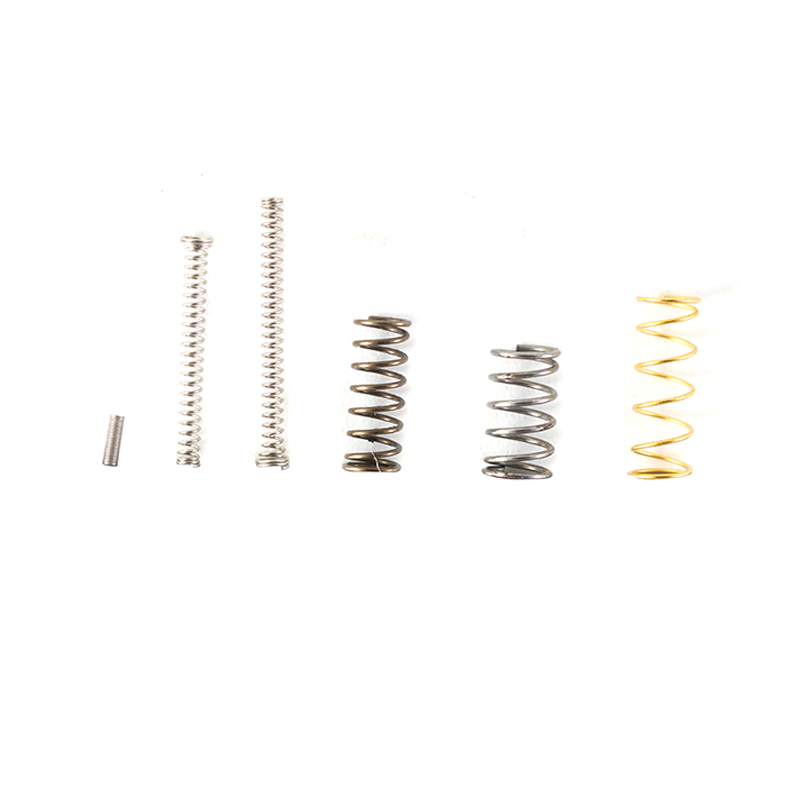
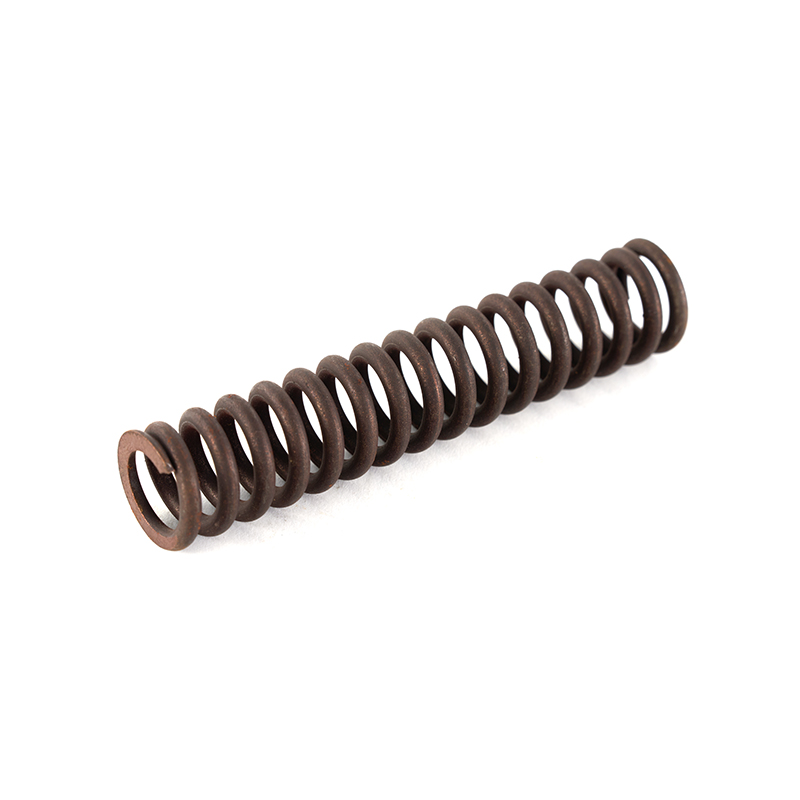
A precision spring is a compression spring that is produced with tighter control during manufacturing, so its behavior becomes more consistent when it is used in real mechanical systems.
In practical engineering environments, people usually do not treat it as a special category on its own. It is more like a requirement level of a normal spring, especially when the application depends on repeatable motion or stable force feedback.
From the outside, there is nothing visually different. Most compression springs look very similar. The real difference only becomes noticeable when the spring is installed into a working product and starts running through repeated cycles.
In some systems, small variation is not important. But in other systems, especially those involving continuous movement or multiple springs working together, consistency becomes more noticeable over time. That is where precision level production starts to matter.
So instead of thinking about it as a separate product type, it is more accurate to understand it as a controlled behavior level inside real applications.
Precision compression springs are widely used, but they are usually not visible to the user. They are hidden inside assemblies and only become noticeable when something does not feel right in movement.
In electronic devices, they are often used in small push mechanisms, switches, and internal return systems. These parts require stable motion even after repeated use.
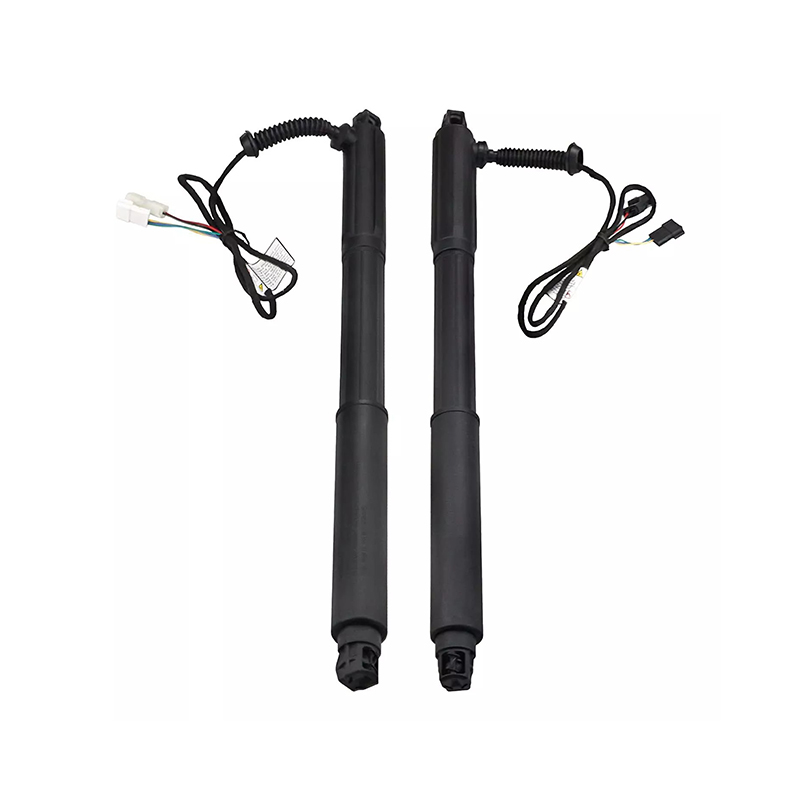
In automotive related components, they can be found in structures that need repeated compression under changing working conditions. The environment in vehicles is not always stable, so consistent mechanical response is important.
In industrial machinery, these springs are often part of systems that run continuously. They help control movement, maintain positioning, or support mechanical return functions in different parts of the equipment.
Even in simple consumer products, compression springs are used to control opening, closing, or pushing actions. In many cases, users interact with the product without realizing there is a spring behind the movement.
Although the applications are very different, the expectation is similar: stable movement over a long period of repeated use.
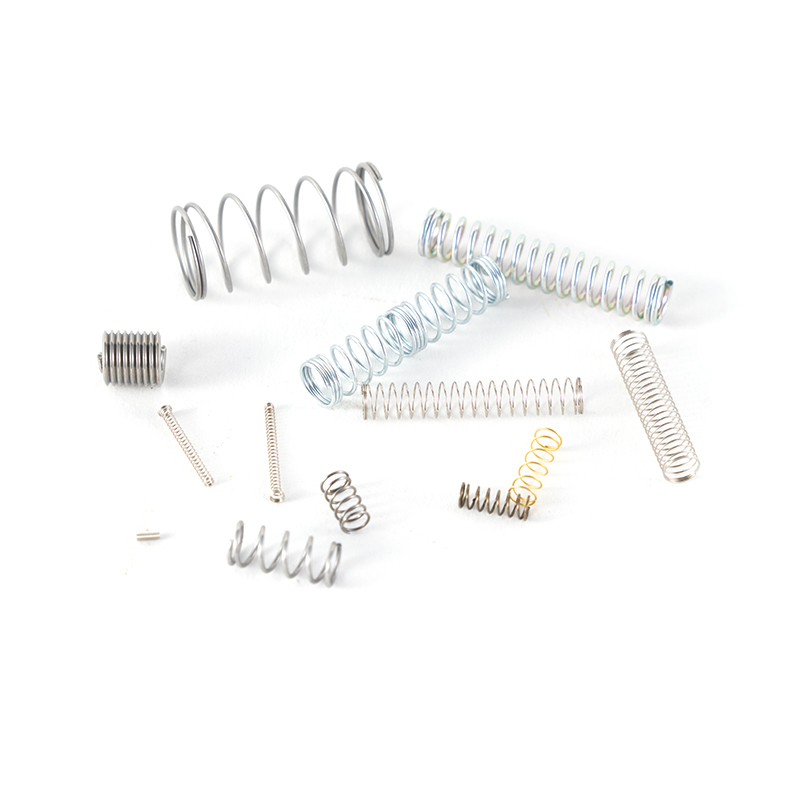
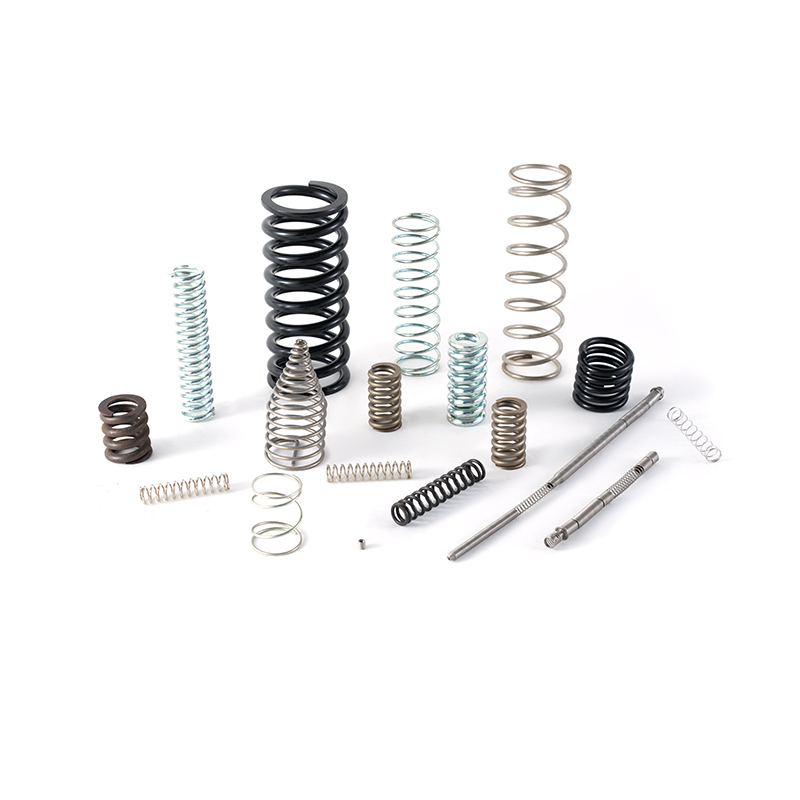
Compression springs are not limited to a single shape. In real manufacturing and design work, different structures are selected depending on how the spring needs to behave inside the system.
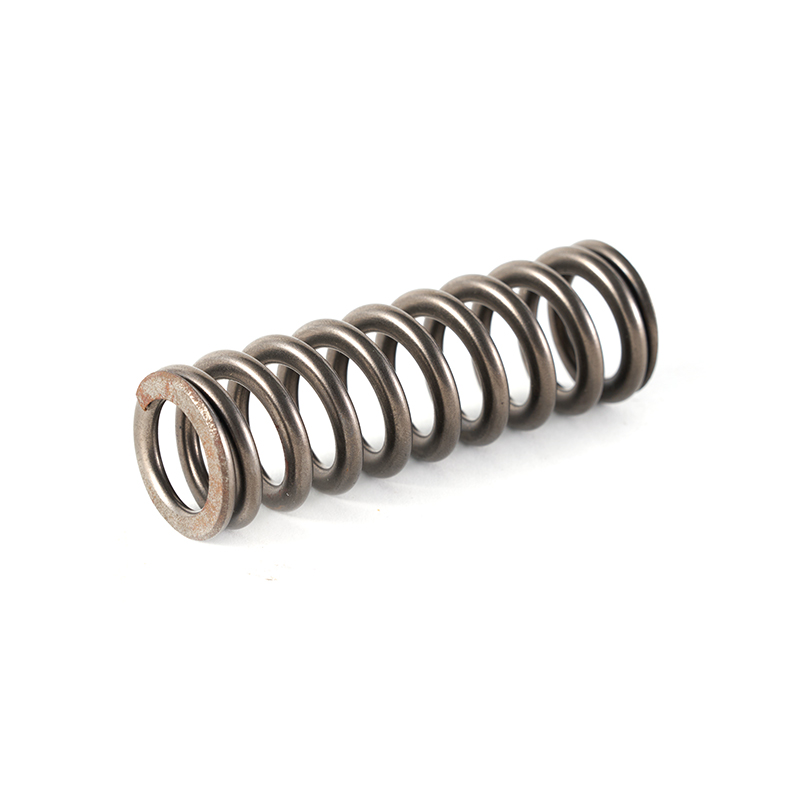
This is the most common form seen in mechanical products. The coil shape is uniform from top to bottom, and the behavior is relatively straightforward.
It is usually chosen when the movement path is simple and the installation space is predictable. In many general mechanical systems, this type is considered the standard starting point.
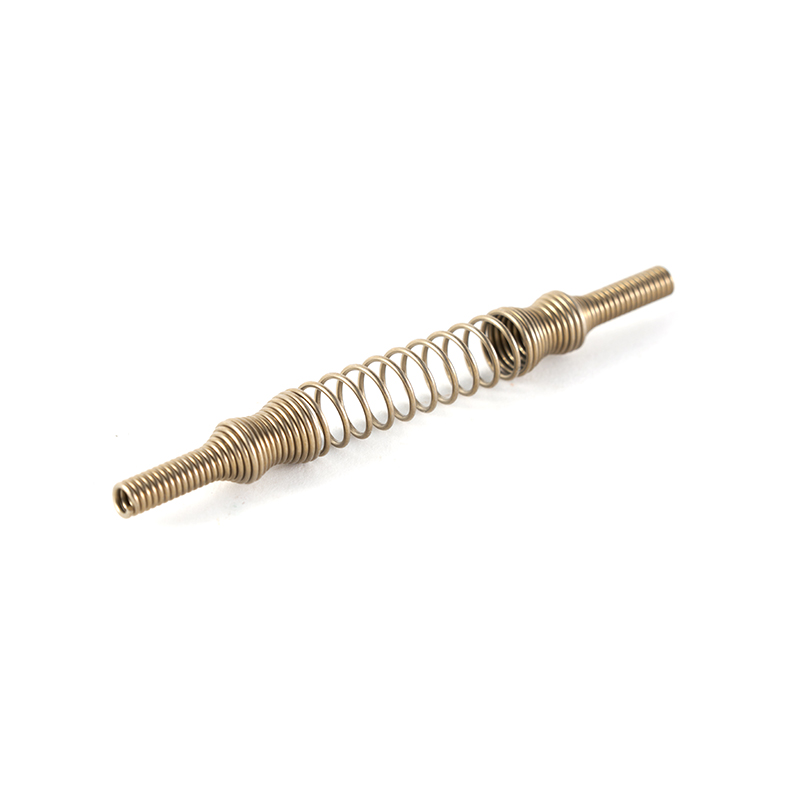
This type has a gradually changing diameter along the coil length. Because of this shape, it can compress into a more compact form in certain situations.
It is often used when space inside the product is limited or when the design requires a different compression behavior compared to a straight coil.
In some assemblies, this structure helps improve how the spring fits into restricted spaces without affecting movement function.
In this design, the spacing between coils is not the same along the spring body. Some areas are tighter, while others are more open.
This creates a different compression experience. Instead of a uniform resistance, the force response changes gradually during movement.
In practical use, this type is selected when designers want more controlled motion behavior instead of a fixed response.
These are small sized springs used in compact products. Even though the size is reduced, the requirement for stable performance is still present.
They are often found in precision devices, small tools, and compact mechanical assemblies where space is limited but movement still needs to remain consistent.
Because of their size, even small manufacturing differences can become noticeable during repeated use, so consistency is still an important consideration.
This type is designed for more demanding mechanical conditions. It is used in systems where the spring is exposed to repeated or continuous load conditions.
The focus in this type is not only on force handling but also on maintaining stable behavior during long term operation.
In industrial environments, these springs are often part of equipment that runs for extended periods.
When a spring is first installed, it usually behaves in a normal and expected way. Compression feels smooth, and the return movement appears stable.
However, real products are not used only for short testing. They go through repeated cycles during actual operation.
Over time, small differences may begin to appear. These changes are usually not sudden. They develop gradually as the spring continues to work under repeated compression and release.
In some systems, this change is barely noticeable. In others, especially where multiple springs are used or where movement sensitivity is higher, the difference can be felt more clearly.
This is why long term consistency is often more important than initial behavior.
A compression spring does not operate alone. It is always part of a mechanical structure.
It interacts with surrounding components such as housings, guides, shafts, and other moving parts. These interactions influence how the spring behaves during operation.
For example, if the movement path is slightly restricted, the spring may not return in the same way as it would in an open structure. If the spring is used in a fast cycle system, its behavior over time may also differ from slower applications.
Even installation conditions can influence performance. Small differences in alignment or positioning can change how the spring responds during compression.
Because of this, real performance is not defined only by the spring itself, but also by the environment where it is used.
At the early stage of selection, most decisions start with basic information such as size, shape, and general type.
In real engineering practice, selection is usually based more on application behavior.
It is often more useful to understand:
These practical factors often influence real performance more than basic specification matching.
Real environment influence on spring behavior
A spring used in a controlled environment behaves differently compared to one used in a system that operates continuously.
Temperature variation, repeated movement, surrounding structure, and installation method all influence how the spring performs over time.
Even two identical springs may behave slightly differently if they are used in different systems or conditions.
This is a normal result of real mechanical operation, not a defect.
A practical way engineers think during selection
Instead of focusing only on catalog information, engineers often think in terms of system behavior.
The main idea is not just what the spring is, but what role it plays inside the product and how stable that role remains during long term use.
This approach helps bridge the gap between design expectations and real application behavior.
Simple comparison between specification thinking and real use thinking
| Specification focus | Real application focus |
|---|---|
| size matching | system movement behavior |
| material type | environmental response |
| initial testing | long term cycle performance |
| drawing accuracy | installation condition impact |
| cost comparison | stability over time |
Small variations that appear after long use
In early stages, two springs may look and feel almost identical. They may even pass the same basic checks during installation.
However, after repeated use in different systems, small differences may appear. One may remain stable, while another may show slight variation in movement behavior.
These differences are usually related to production consistency, usage environment, and system interaction rather than visible design changes.
They are often gradual and only become noticeable after extended operation.
Why consistency matters in multi spring systems
In many products, more than one compression spring is used within the same system.
When this happens, consistency becomes more important than individual performance. If each spring behaves slightly differently, the overall movement may feel uneven.
This does not always cause failure, but it can influence smoothness and balance of operation.
For this reason, production consistency is often considered an important factor in engineering applications.
Communication during selection improves matching accuracy
In real sourcing and engineering work, spring selection is rarely done only from drawings.
Better results usually come when application details are clearly shared between user and manufacturer.
Useful information often includes:
This kind of communication helps align design expectations with real conditions.
A Precision Compression Spring may look simple, but it plays a steady role inside mechanical systems that rely on repeated movement.
Its value is not only in its shape or specification, but in how consistently it behaves during real use.
When selection matches actual working conditions, system movement tends to remain more stable over time. When it does not, small differences may gradually appear during operation.
In practical engineering work, the focus is not only on choosing a spring, but on understanding how that spring behaves inside a complete system over long term use.

QUICK LINKS
PRODUCTS
If you have any questions, please get in touch with us.
Tel: +86-13626772101
WhatsApp: +86-13626772101
Add: Ningdeli Spring, Danxi First Industrial Zone, Danxi Town, Yueqing City, Zhejiang

Wholesale Springs Manufacturer